Big Box Store Sheds vs Custom Built Sheds
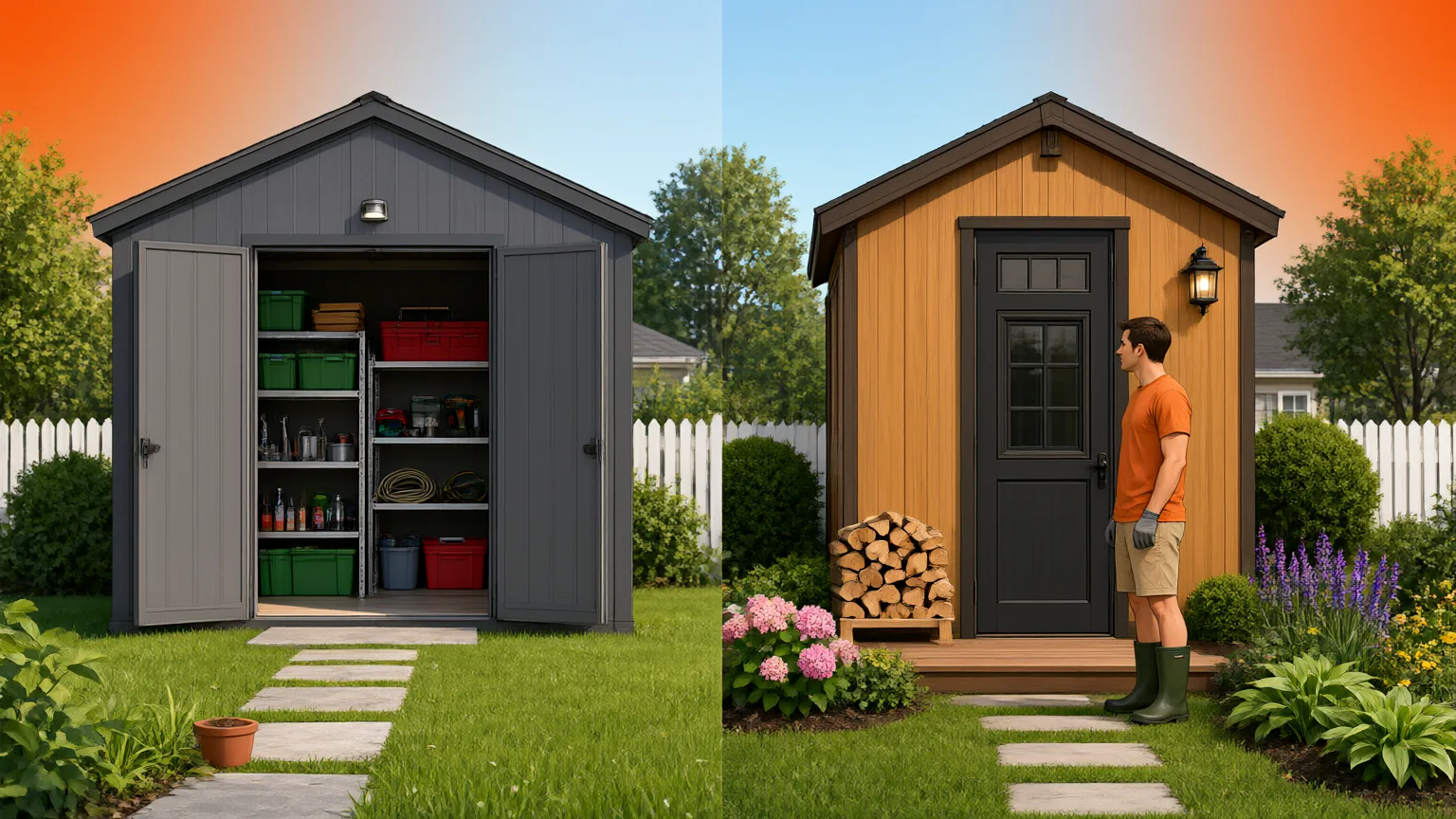
When you start comparing big box store sheds vs custom built sheds, the first thing you notice is how different the shopping experience feels. One is a quick trip down the aisle with a flat price and a box. The other starts with questions about how you will use the building, where it will sit, and what your property allows.
A shed is a structure on a foundation, subject to local rules, delivered over your lawn, and expected to last for decades. The cheap-looking option and the expensive-looking one can end up closer in real cost than the sticker suggests, or much further apart.
We’ll compare these options across six criteria: upfront price versus total cost, materials and durability, customization, permits and site prep, delivery, and long-term value. We build Amish-made sheds and garages in Parkesburg, Pennsylvania, and serve PA, NJ, DE, and MD, so the examples stay grounded in what actually happens on local properties.
Key takeaways
- Big box store sheds usually win on upfront price, but custom built sheds often deliver better durability and fit for long-term use.
- Compare total project cost, including delivery, site prep, assembly, and permits, not just the sticker price.
- Customization matters most if you need a specific size, layout, or features for a workshop, garage, or hobby space.
- Local permit and zoning rules can affect both options; check requirements before you buy.
- White Pine Structures offers in-stock and custom Amish-built sheds with delivery across PA, NJ, DE, and MD, plus planning tools to compare options.
On this page
- Big Box Store Sheds vs Custom Built Sheds: What's the Difference?
- Cost: Upfront Price vs Total Cost of Ownership
- Materials and Durability: Will It Last?
- Customization and Design: Fit for Your Property and Use
- Permits, Zoning, and Site Preparation
- Delivery, Installation, and Long-Term Value: Which Is Right for You?
- Frequently asked questions
- Final thoughts
Big Box Store Sheds vs Custom Built Sheds: What's the Difference?
The short answer: a big box store shed is a product you pick from a shelf or a catalog, while a custom built shed is a building made to fit your property and how you plan to use it. Neither is automatically better. The right choice comes down to your budget, your timeline, what you're storing, and how long you expect the building to last.
Here's how the two usually break down:
- Big box store sheds are pre-fabricated kits or pre-assembled units sold through national retailers. You choose from a limited menu of sizes, styles, and materials, and you often handle assembly or arrange your own installation.
- Custom built sheds are built to order by a manufacturer or local builder. You choose the size, siding, roofing, doors, windows, and interior finishes, and the building is constructed to those specifications.
That difference matters most in three situations: when your space is an odd shape or size, when you need the building to match your home's look, and when you want it to still be standing in 20 years.
Before you decide, it helps to know what you're actually comparing. This article walks through six criteria:
- Cost, both upfront and over the life of the building
- Materials and durability
- Customization and design
- Permits, zoning, and site preparation
- Delivery and installation
- Long-term value
One practical note: you don't always have to choose between the two categories. White Pine Structures builds Amish-built sheds and garages in Parkesburg, Pennsylvania, and offers both in-stock buildings and custom-built options, so you can compare pricing and construction side by side before committing. If you want to see what that looks like in practice, start with the guide on what you're actually paying for.
Cost: Upfront Price vs Total Cost of Ownership
The short answer: a big box kit usually wins on the sticker, while a custom-built shed usually wins on the total bill. Those are two different numbers, and mixing them up is how budgets get blown.
What the sticker price doesn't show
A kit price often covers boards, panels, and hardware. It may not include delivery, site prep, a foundation, assembly labor, or permits. Add those in and the gap between the two options narrows fast.
| Cost item | Big box kit | Custom-built shed |
|---|---|---|
| Purchase price | Lower sticker | Higher upfront |
| Delivery | Often extra or not offered | Included in service area |
| Foundation or pad | Usually your job | Can be arranged or quoted |
| Assembly | Usually your labor | Professional construction |
| Permits | Your responsibility | Your responsibility |
| Repairs and replacement | Sooner, typically | Later, with durable materials |
Permit and site prep costs
Permit rules vary by state and town. In Pennsylvania, one-story detached storage sheds under 1,000 square feet are generally exempt from the statewide building code, but many municipalities lower that threshold to 200 or even 120 square feet.
New Jersey almost always requires a zoning permit, plus a construction permit above 200 square feet. Fees and any engineer-stamped drawings are extra.
Site prep is the other line item. A level, well-drained pad is required either way. White Pine Structures can arrange stone or concrete pad installation through trusted partners, or you can prepare the site yourself to the building's requirements.
Long-term repair and replacement costs
Cheaper kits often mean thinner materials and a shorter service life. Ask how long the shed should last and what a roof or floor replacement would cost. For a closer look at what separates the two, see our guide to big-box sheds vs. custom-built.
Financing and payment terms differ too. Ask about deposits, progress payments, and warranty coverage before you compare totals. Our 3D building designer and written quotes help you price the whole project, not just the box.
Materials and Durability: Will It Last?
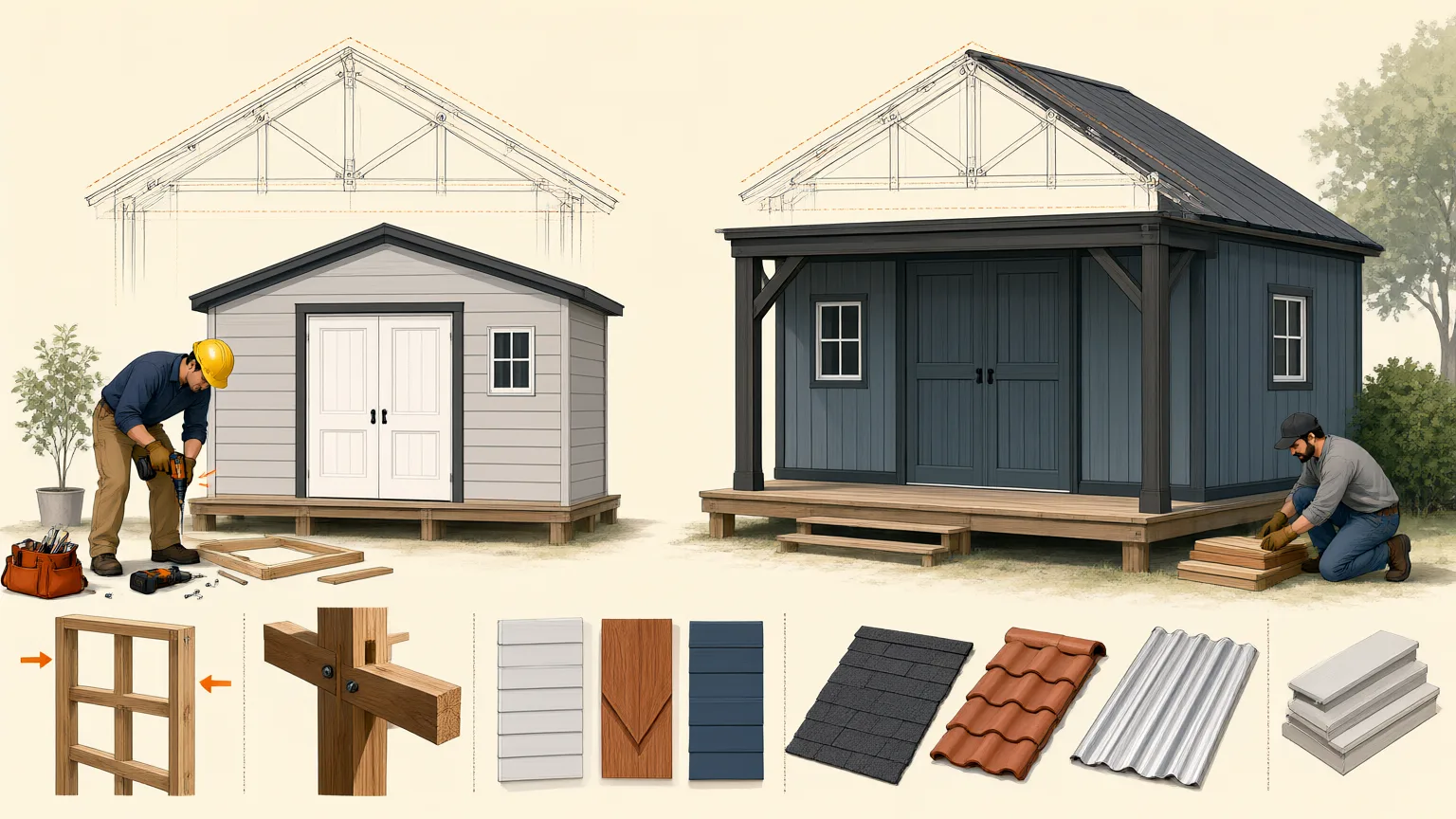
A shed that costs less up front often costs more later, and materials are where that difference starts. Two buildings can look similar from the driveway and still be framed, sided, and floored very differently.
Framing and floor systems
Big box kits typically ship with lighter dimensional lumber, gusset plates, or engineered components sized to fit a pallet and a homeowner's assembly schedule. Custom Amish-built sheds usually start with heavier framing and traditional joinery, which holds up better under snow load and repeated freeze-thaw cycles.
Floors deserve the same scrutiny:
- Pressure-treated wood floors resist ground moisture, but the treatment applies to the framing, not the decking.
- Plywood decking (¾-inch smooth sanded, for example) handles foot traffic and heavy equipment better than thinner panels.
- OSB is common in kits and can swell at the edges if moisture gets in.
- Tongue-and-groove flooring is a step up for garages where you'll park equipment or roll heavy loads.
White Pine Structures publishes pressure-treated foundation runners and floor joists, with ¾-inch plywood decking on applicable wood-floor models. Pressure-treated supports don't mean the plywood itself is treated, so keep an eye on ventilation and drainage.
Siding, roofing, and weather resistance
In PA, NJ, DE, and MD, your building faces humid summers, snow load, and occasional high wind. Siding and roofing choices should match that reality:
- Vinyl sheds are low maintenance and resist rot, but can crack in extreme cold.
- Wood siding looks classic and takes paint or stain, but needs periodic refinishing.
- LP SmartSide engineered wood siding offers wood appearance with better moisture resistance.
- Architectural shingles and metal roofs handle snow and rain well; metal tends to last longer with less upkeep.
White Pine Structures also uses SilverTech radiant barrier to help manage summer heat inside the building.
Warranty and service
Big box store warranties often cover only the kit components, with limited coverage on labor and no help if something goes wrong years later. Custom builders may offer structural warranties and service after the sale, which matters when a door needs adjusting or a panel needs replacing. Ask what's covered, for how long, and who performs the work.
For a deeper look at how construction choices affect lifespan, see How Long Do Sheds Last?.
Customization and Design: Fit for Your Property and Use
A big box shed is designed for a generic buyer, so your choices usually stop at a paint color and maybe a shelf kit. A custom built shed starts with your yard, your use, and your layout. That difference shows up in three places.
Size and layout flexibility
Big box sheds come in fixed footprints, typically a handful of standard sizes. Custom building lets you set the dimensions, door widths, and window placement around what you actually need to store or do.
- Nominal dimensions differ from usable interior space, so measure what you plan to put inside.
- Confirm clear door openings before assuming a mower, ATV, or tractor will fit.
- Door type and swing direction matter as much as door size.
Exterior and interior options
Exterior choices include siding, roof style, shingle color, and door and window styles. Interior choices are where a custom shed pulls ahead: lofts, workbenches, shelving, and electrical rough-ins can all be planned in from the start.
Semi-custom is worth knowing about too. In-stock models can often be modified with add-ons, so custom does not have to mean fully bespoke.
Designing for a specific use
Each use has its own layout logic:
- Storage: wide double doors, a ramp, and clear floor space.
- Workshop: bench height, outlet placement, and lighting.
- Garage: a taller door, a deeper bay, and floor covering that handles vehicles.
- Hobby space or small business: headroom, ventilation, and room to work.
Before you order, use our online 3D building designer to see how styles, sizes, colors, and options come together. You can also browse custom-built sheds to compare layouts, then check the display lot in Parkesburg to see the details in person.
Permits, Zoning, and Site Preparation
Big box store staff usually sell sheds, not permits. They may not know your township's setback rules or whether your HOA allows a shed at all, which leaves zoning checks, HOA approval, and site prep on you. Custom builders who work in your area can flag the common requirements and site conditions before you buy.
When a permit is typically required
Rules vary by state, municipality, and building, so confirm yours locally. These factors usually decide it:
- Size and height: Pennsylvania generally exempts one-story detached sheds under 1,000 square feet from a building permit, but most municipalities lower that threshold, often to 200 square feet. New Jersey requires a construction permit above 200 square feet or 10 feet tall and a zoning permit in nearly every municipality.
- Setbacks and lot coverage: Zoning rules apply even when no building permit is needed.
- Foundation type: A permanent concrete slab or frost footers can change the exemption.
- Electricity: Adding wiring or plumbing typically triggers a permit.
Site prep checklist
- Level, well-drained ground
- A base of gravel, concrete, or blocks, chosen to suit the building
- Clear access for delivery equipment
Delivery access and placement
Check gate widths, overhead branches, and soft ground before delivery day. Your building needs an accessible route and a level, well-drained foundation.
White Pine Structures publishes state-specific permit guides for PA, NJ, DE, and MD, and can arrange stone or concrete pad installation through trusted partners. For base options, see our guide to gravel vs. concrete foundations.
Delivery, Installation, and Long-Term Value: Which Is Right for You?
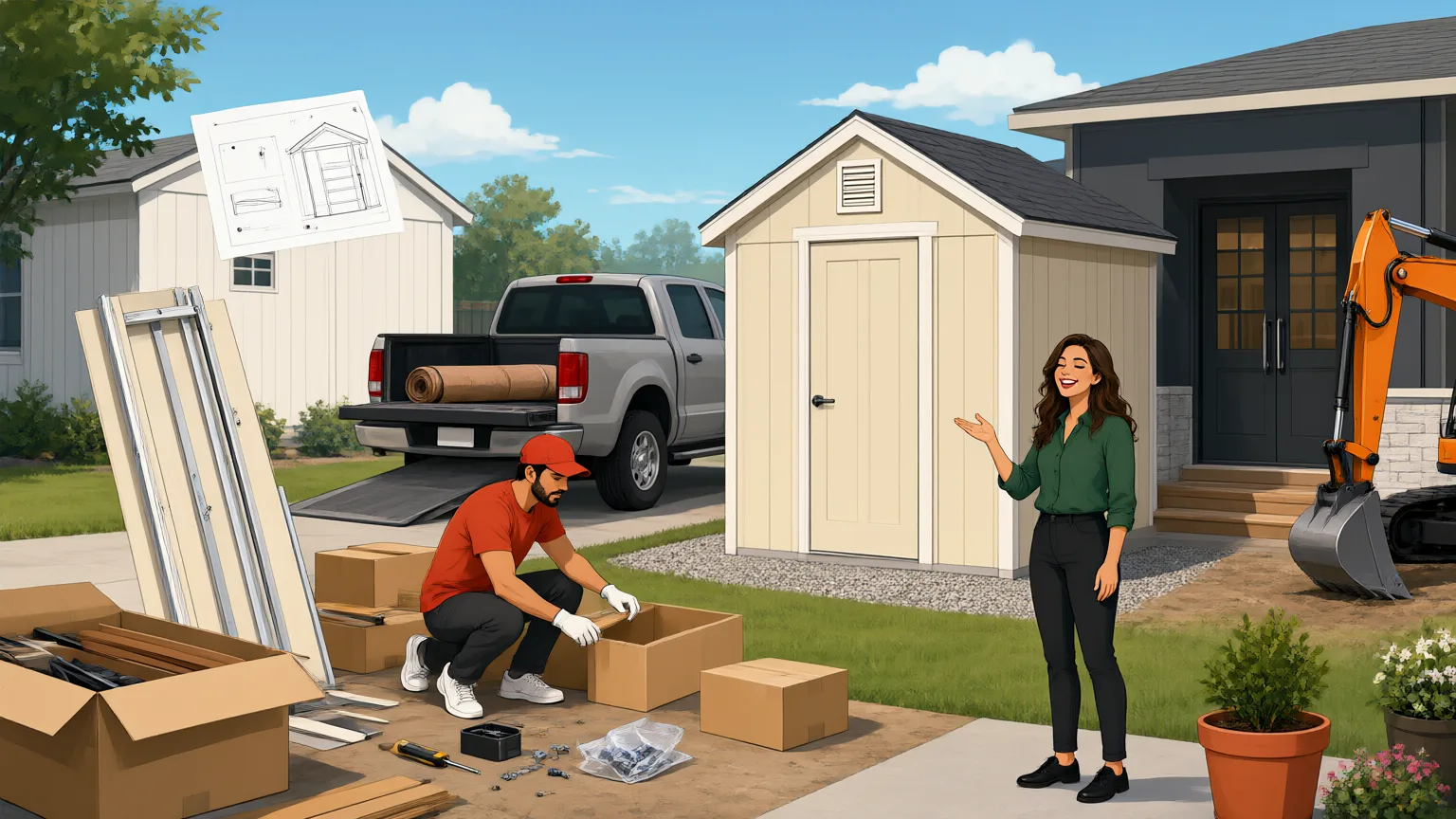
The last questions to settle are who shows up, who is responsible when something goes wrong, and what the building is worth to you in five or ten years. Those answers differ a lot between a kit and a custom build.
DIY vs professional installation
Big box sheds usually come one of two ways: a flat-pack kit you haul home and assemble yourself, or a delivered building put together by a third-party installer the store contracts. Either way, find out up front:
- What's included in the price, and what costs extra (assembly, anchor kit, floor, delivery)
- Who handles warranty claims if a panel or door fails
- Who to call if the installer's work is the problem
With a custom builder, the crew that delivers or builds the shed usually works for the company that sold it. That means one point of contact for quality issues. Some models arrive fully assembled and are set in place; others are built on site. Not every model can be built on site, so confirm before you buy.
Delivery and service area
Ask about the delivery route before you commit. A steep driveway, a low wire, or a soft lawn can turn a simple drop-off into a problem.
White Pine Structures serves PA, NJ, DE, and MD only, and offers a free photo and address review so you can flag access issues early. If you'd rather not handle assembly, in-stock and custom buildings are worth comparing side by side.
Verdict by use case
- Lowest upfront cost, basic storage: a kit can work if you're handy and the site is easy.
- Fastest timeline: in-stock buildings are ready to go.
- Maximum customization: a custom build fits your layout, doors, and windows.
- Long-term durability and resale appeal: a well-built shed tends to hold up and look right on the property, while a basic kit may not.
Match the choice to your priority, then get the details in writing before you sign.
Frequently asked questions
Are big box store sheds cheaper than custom built sheds?
Usually yes up front. Big box sheds cut cost through standard sizes, thinner framing, and fewer options. Custom sheds cost more because you choose size, siding, roofing, and layout.
Compare the full project, including foundation, delivery, and site prep, not just the sticker price. A written quote shows your real number.
What is the difference in materials between a big box shed and a custom shed?
Big box sheds typically use lighter framing, thinner siding, and basic roofing. Custom builders often use pressure-treated foundation runners and floor joists, 3/4-inch plywood decking, LP SmartSide siding, and architectural shingles. Specifications vary by model, so verify the construction details for the exact building you are considering before you buy.
How long does a big box shed last compared to a custom built shed?
Lifespan depends on materials, foundation, drainage, and maintenance, not just who sold it. A well-built shed on a level, well-drained pad with regular upkeep can last decades. A cheap shed on a poor base can fail much sooner. Ask what foundation the building needs and how it handles water.
Can I customize a big box store shed?
Limited. Big box sheds usually come in set sizes, layouts, and colors, with few window, door, or flooring choices.
Custom builders let you pick dimensions, door placement, windows, siding, roofing, and flooring. If your needs are specific, like fitting a riding mower or a workshop bench, customization matters more than the base price.
Do I need a permit for a shed, and does it differ between big box and custom sheds?
Permit rules depend on your location and the building, not where you bought it. Many areas set size, height, and setback limits, and some require a building permit. Zoning and building permits are separate approvals. Check with your local office before ordering, and confirm whether your chosen size triggers a permit.
Which is better for delivery and site preparation, a big box shed or a custom shed?
It depends on the seller. Big box sheds often arrive as kits you assemble or hire out.
Custom builders frequently deliver and set the building, but you still need a level, well-drained foundation and an accessible route. White Pine Structures arranges professional stone and concrete pads through trusted partners, or you can prepare the site yourself to the building's requirements.
Final thoughts
Big box store sheds win on speed and a low sticker price. Custom built sheds win on materials, layout, and how well the building fits your yard and your storage needs over the next decade or two. The right answer depends on what you plan to put inside it and how long you want it to last.
If you are still weighing options, the clearest next step is to see what is actually available. Explore our sheds and garages at White Pine Structures, compare sizes, styles, and pricing, and use the 3D building designer to sketch a layout before you commit.
Explore our sheds and garages whitepinestructures.com/