How Is a Shed Delivered and Set Up? Step-by-Step Guide
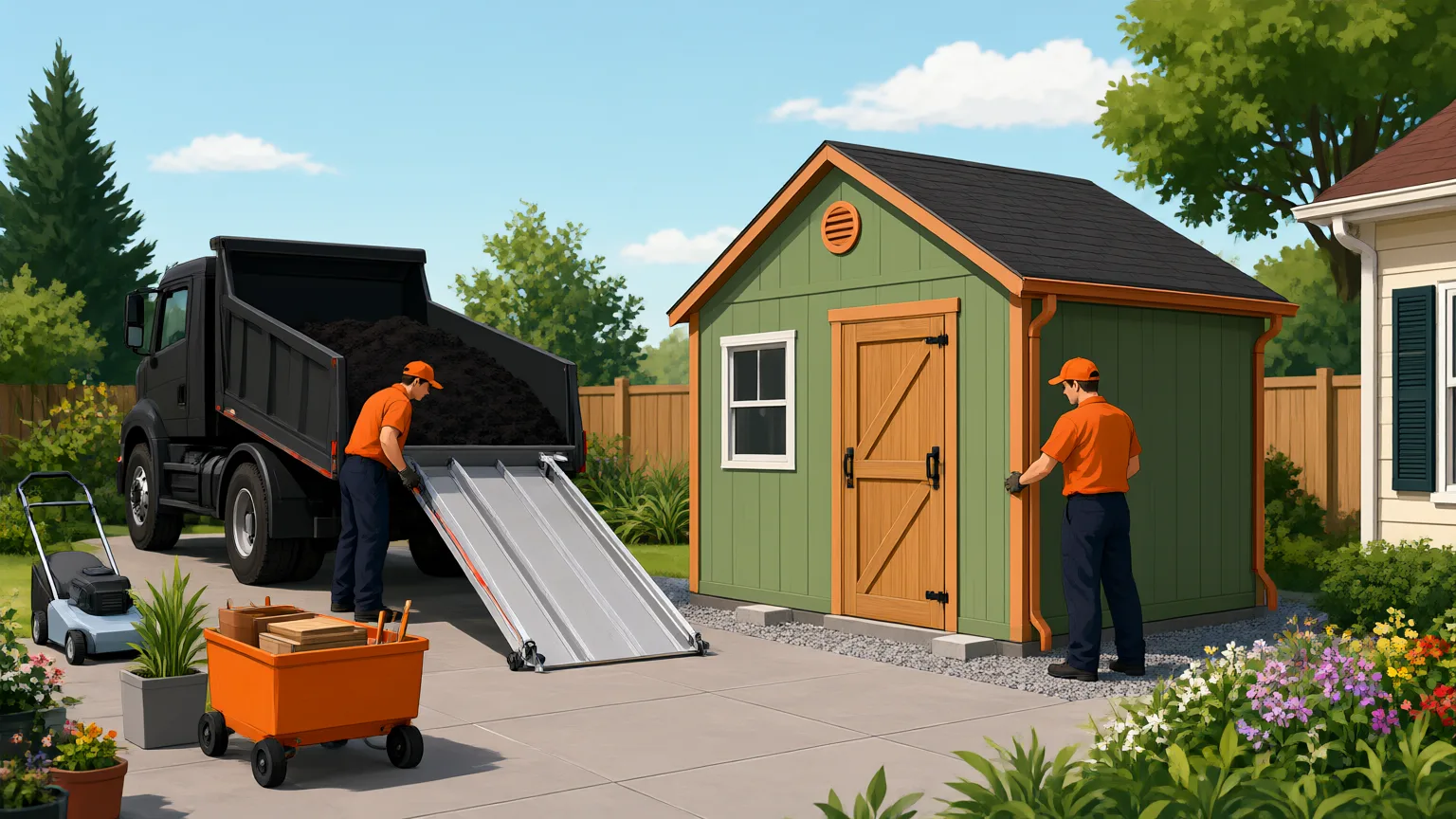
If you have ever wondered how is a shed delivered and set up, the honest answer is that it depends on your site, your building, and your local rules. Most homeowners picture a truck pulling up and a shed appearing minutes later. The real process starts weeks earlier, with a level foundation, a clear path to the backyard, and a quick check of permits and zoning.
This guide walks through the actual delivery-day sequence, from confirming your building is ready to the final walkaround once it sits on its pad. You will see where projects get delayed, why access matters more than most people expect, and what changes when you are in Pennsylvania, New Jersey, Delaware, or Maryland. The goal is simple: fewer surprises, and a building placed where you want it.
Key takeaways
- Shed delivery starts with confirming your order, permits, and a level, accessible site.
- Truck access and site measurements determine whether a shed arrives whole or in sections.
- Delivery day includes placement, leveling, and a walkthrough to confirm condition.
- Permit and setback rules vary by municipality across PA, NJ, DE, and MD, check before delivery.
- White Pine Structures offers permit guides, a 3D designer, and photo/address reviews to plan delivery.
On this page
- Step 1: Confirm Your Shed Is Ready for Delivery
- Step 2: Check Local Permits and Zoning Before Delivery
- Step 3: Prepare a Level, Accessible Site
- Step 4: Understand How the Shed Arrives
- Step 5: Delivery Day, Placement and Setup
- Step 6: Final Inspection and Getting Settled
- Frequently asked questions
- Final thoughts
Step 1: Confirm Your Shed Is Ready for Delivery
Before anyone talks about trucks or routes, your order has to be finished on paper. This step is about locking down what you bought and when it will be built, so delivery day doesn't turn into a guessing game.
In-stock vs. custom-built timelines
In-stock buildings are already assembled and sitting on a lot, so they can usually be scheduled for delivery sooner. Custom-built sheds are made to your specifications first, and delivery gets scheduled once the build is complete. That difference matters if you need the building ready for a specific event or seasonal storage change.
What to verify on your order
Go through your written order summary line by line and confirm:
- Size, style, and layout
- Siding and trim colors
- Roof color and roofing type
- Windows, doors, and their placement
- Flooring and any structural options
- Add-ons such as ramps, vents, or shelving
If something on that list doesn't match what you pictured, say so now, not after the building is on the truck. If you're still deciding, White Pine Structures offers an online 3D building designer and a browsable in-stock inventory, so you can settle size, style, and options before the build is scheduled. Our Shed Size Calculator can help you confirm dimensions first.
Then ask two scheduling questions: what's the expected build completion date, and what delivery window should you plan for? Get the name and phone number of the person who will call you to schedule, and make sure that number reaches you, not just your spouse or your contractor.
How to tell it worked: you have a confirmed build completion date, a delivery window, and a written order summary that matches what you expect.
Step 2: Check Local Permits and Zoning Before Delivery
Permits are the step that surprises people most, because the rules change at the town line, not the state line. A quick call to your municipal office before you finalize placement saves you from moving a finished building later.
Permit triggers by state
Start by asking your municipality two questions: does this building need a building permit, and does it need a zoning permit? Size, height, and use all matter.
- Pennsylvania: Under the state Uniform Construction Code, one-story detached accessory structures under 1,000 square feet are generally exempt from a building permit. But most municipalities have lowered that threshold, often to 200 square feet and sometimes 100, so the state number alone tells you little. The exemption also only holds if the building is storage-only with no electric, plumbing, or heat, and no permanent foundation.
- New Jersey: You almost always need a zoning permit, and a construction permit kicks in above 200 square feet, above 10 feet tall, or with any wiring or plumbing.
Our PA Shed & Garage Permit Guide and NJ Shed & Garage Permit Guide walk through these thresholds, and we publish matching guides for DE and MD. Use them as a starting reference, then confirm with your own township.
Setbacks and HOA rules
Zoning rules apply to sheds of any size, even ones that need no building permit. Ask specifically about:
- Setback distances from property lines, which often differ for side versus rear yards.
- Easements and utility rights-of-way, where you cannot build at all.
- Lot coverage limits, which cap total impervious area.
- HOA or deed restrictions on size, style, color, and placement.
How to tell it worked: you have written confirmation or a permit from your local office, plus a placement plan that meets every setback rule.
Step 3: Prepare a Level, Accessible Site
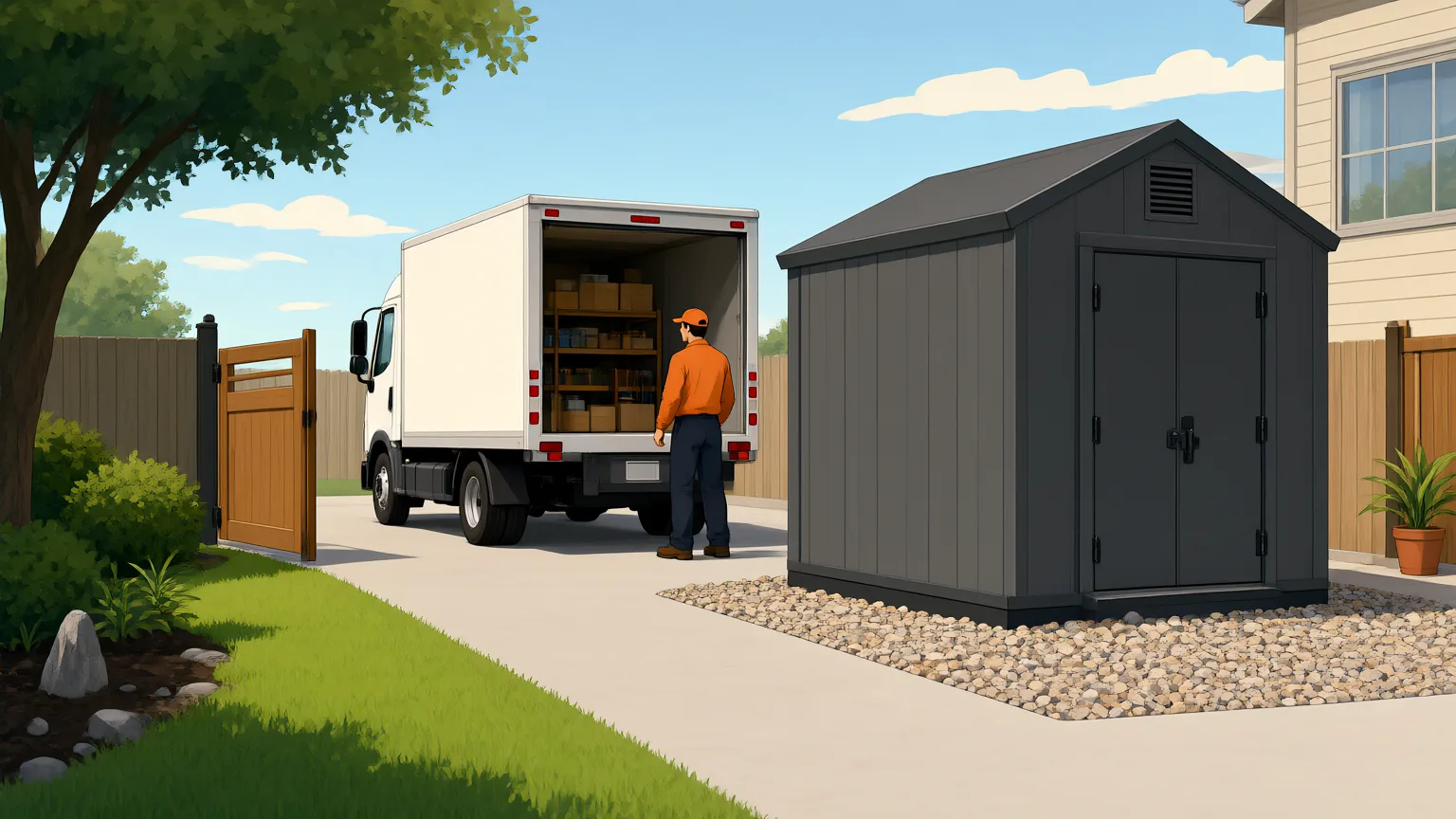
A shed arrives as a real, heavy structure, and the truck and trailer that carry it need room to work. Site preparation is the customer's responsibility, so a little measuring and clearing now prevents a failed delivery later.
Building a proper pad
Your building needs a suitable, level, well-drained foundation. A firm, flat site keeps the floor and doors working properly for years.
- Clear the delivery path of low branches, fences, parked cars, and anything else the truck or building could catch on.
- If the ground is soft or uneven, add a gravel or crushed-stone pad. It spreads weight and stays level through wet seasons.
- Mark underground utilities before anyone digs, and keep the placement area clear of tools, hoses, and stored items.
White Pine Structures can arrange professional stone or concrete pad installation through trusted partners, and you can also prepare the site yourself to the building's requirements. Foundation requirements vary by model, so confirm what yours needs.
Measuring truck access
Walk the route the truck will take, not just the spot where the shed will sit. Then measure:
- Gate openings and driveway width.
- The turning radius at corners and the space to back in.
- Overhead clearance from branches and wires.
How to tell it worked: the site is level, the path is clear, and you have measured that the truck and shed can physically reach the spot.
Step 4: Understand How the Shed Arrives
Before delivery day, you should know exactly how your building will travel and what that means for your yard. The model, size, and site access determine whether a building arrives in one piece, in finished modular sections, or needs on-site work, and not every model can be built on-site.
Whole-building delivery
Most sheds are built in a shop and delivered as a complete structure on a truck or trailer. At White Pine Structures, Mini Barns are built fully assembled at the Parkesburg, PA shop and set exactly where you want them with a shed mule, with no kit and no assembly. That equipment rolls the building off the trailer and positions it on your pad.
Sectional delivery and on-site assembly
Some buildings are delivered in sections and assembled on site, depending on size and access. A wide garage or a long barn may not fit down a driveway or under tree limbs as one piece, so it arrives as finished modular sections that get joined together. The delivery method depends on three things:
- Shed size and model
- Site access, including gates, turns, and overhead wires
- Local regulations that affect placement or foundation
| Delivery method | Typical fit | What to expect |
|---|---|---|
| Whole building | Smaller sheds, clear access | Arrives complete, set in place |
| Sectional | Large buildings, tight access | Sections joined on site |
Ask White Pine Structures which delivery method applies to your building and whether a photo and address review is recommended. That review catches access problems before delivery day.
How to tell it worked: you know whether your shed will arrive whole or in sections and what equipment will be used.
Step 5: Delivery Day, Placement and Setup
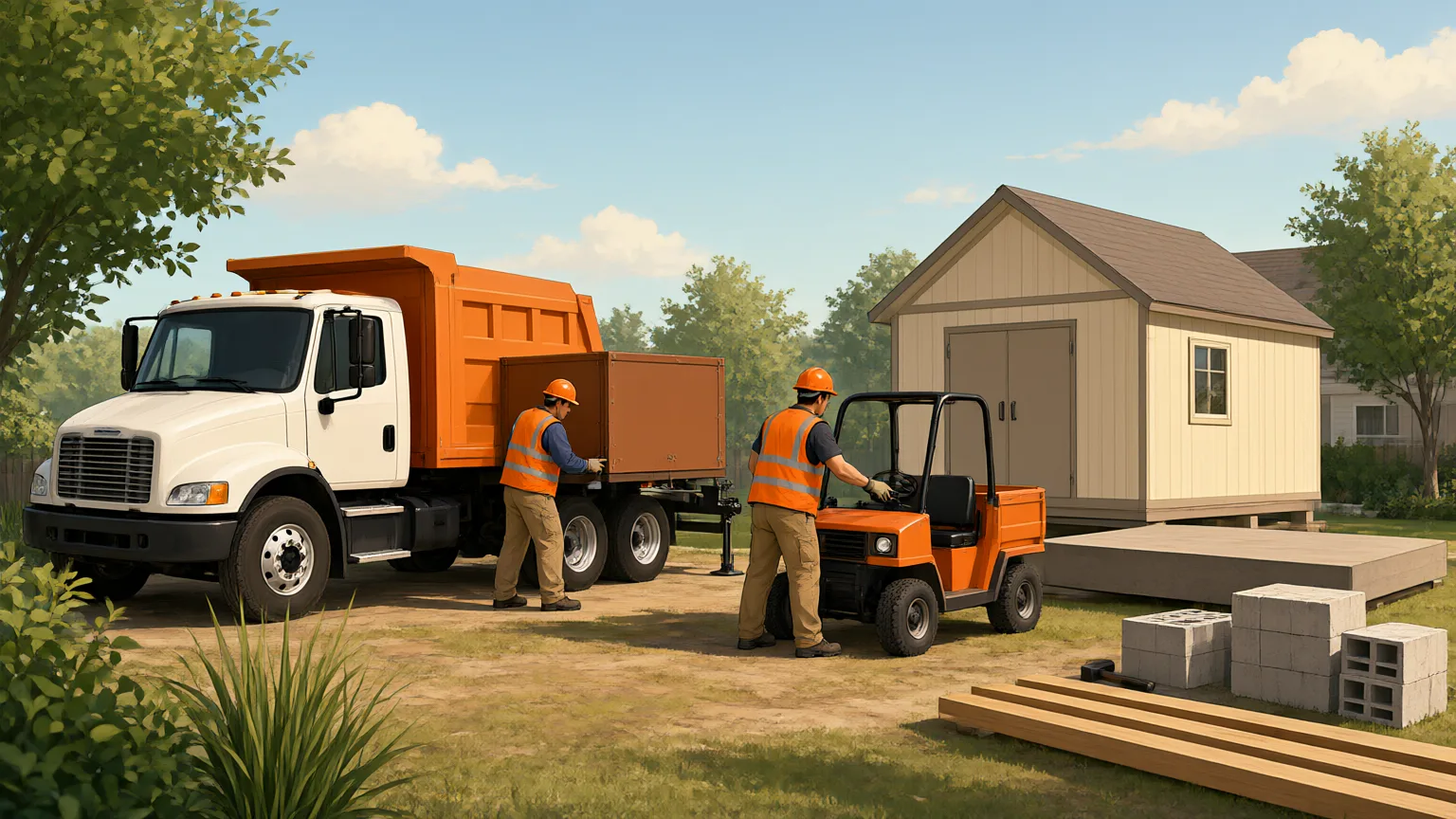
Delivery day is mostly a waiting game for you and a careful choreography for the crew. Once the truck arrives, the driver sizes up the approach and positions the vehicle so the building can come off cleanly. From there, a trailer or a shed mule takes over, carrying the structure from the street or driveway to the exact spot you agreed on.
Positioning the shed
Where the building lands depends on what you prepared and what the plan calls for:
- Blocks or skids for portable buildings that sit above grade on pressure-treated runners.
- A prepared foundation such as a stone pad or concrete slab, where the shed is set directly on the surface.
- A mix of both, when one end of the site needs shimming to bring the building level.
The crew checks level as they go. A shed that looks fine from the driveway can still be out of level, and that shows up later as sticking doors.
Final adjustments
Before anyone leaves, the team walks the building with you:
- Doors and windows are opened, closed, and adjusted so latches catch and panels swing freely.
- Ramps, if included, are set and checked for a stable transition.
- You confirm the placement matches what you pictured, including clearance from fences, trees, and property lines.
How to tell it worked: the shed sits level in the agreed location, doors and windows operate smoothly, and you have signed off on placement. If something looks off, say so before the truck pulls away. It is far easier to nudge a building a few inches now than to move it next month.
Step 6: Final Inspection and Getting Settled
The building is set, the crew is packing up, and this is your one clear chance to look everything over while they are still on site. A slow walkthrough now is easier than a phone call next week.
What to inspect
Walk the exterior first, then step inside. Check for:
- Scuffs, scrapes, or dings on siding, trim, and corners that may have happened in transit
- Doors and windows that open, close, and latch smoothly
- The roof line and shingles for anything shifted or lifted
- The floor for soft spots, gaps, or movement underfoot
- Every option you ordered, installed and working: windows, doors, ramps, shelving, vents, and any electrical rough-in
Compare what you see against your written quote, since that document lists your final configuration. If something is missing or damaged, point it out before the crew leaves. That is the fastest path to a fix.
Anchoring and warranty
Ask the crew about anchoring or tie-down recommendations for your area. Requirements vary by location and building, and wind exposure matters. This is also the moment to ask how to reach White Pine Structures with warranty or service questions, and to note what routine care the building needs, like checking caulk lines and keeping the site drained.
You will know it worked when you have a completed walkthrough, photos of the final setup, and a clear understanding of your warranty and care steps. For a longer view of upkeep, see how long sheds last.
Frequently asked questions
How is a shed delivered?
Most sheds arrive fully assembled on a flatbed truck or trailer and are rolled or slid off onto your prepared pad. Smaller or hard-to-reach sites may use a modular build, where panels are assembled on site. Either way, the crew needs a clear route and a level, well-drained foundation before delivery day.
How long does shed delivery and setup take?
A standard pre-built shed is usually set in place fairly quickly once the truck arrives. Modular or on-site assembly can take longer. Total time depends on building size, site access, and foundation readiness, so confirm the schedule with White Pine Structures.
Do I need to prepare the site before my shed is delivered?
Yes. You need a level, well-drained foundation and a clear, accessible route for the truck and crew. You can build that yourself to the building's requirements, or White Pine Structures can arrange professional stone or concrete pad installation through trusted partners. Site prep is separate from the building price.
What does shed setup include?
Setup covers positioning the building on your pad, leveling it, and confirming doors and windows work correctly. It does not include clearing trees, moving fences, running electricity, or building the foundation unless you arranged those separately. Ask what your specific quote includes before delivery day.
Final thoughts
The short version: a shed delivery goes smoothly when the site is level, well drained, and reachable by the delivery truck, and when the building's footprint and door clearances are confirmed before the truck rolls. Most delays trace back to site access or foundation prep, not the building itself.
Your next step is to explore our sheds and garages, compare models and starting prices, and note the footprint and delivery route each one needs. If you're unsure about your site, request a free photo and address review so we can flag access or foundation issues early, before you commit to a delivery date.
Explore our sheds and garages whitepinestructures.com/