What Is the Most Common Shed Size? A Homeowner's Guide
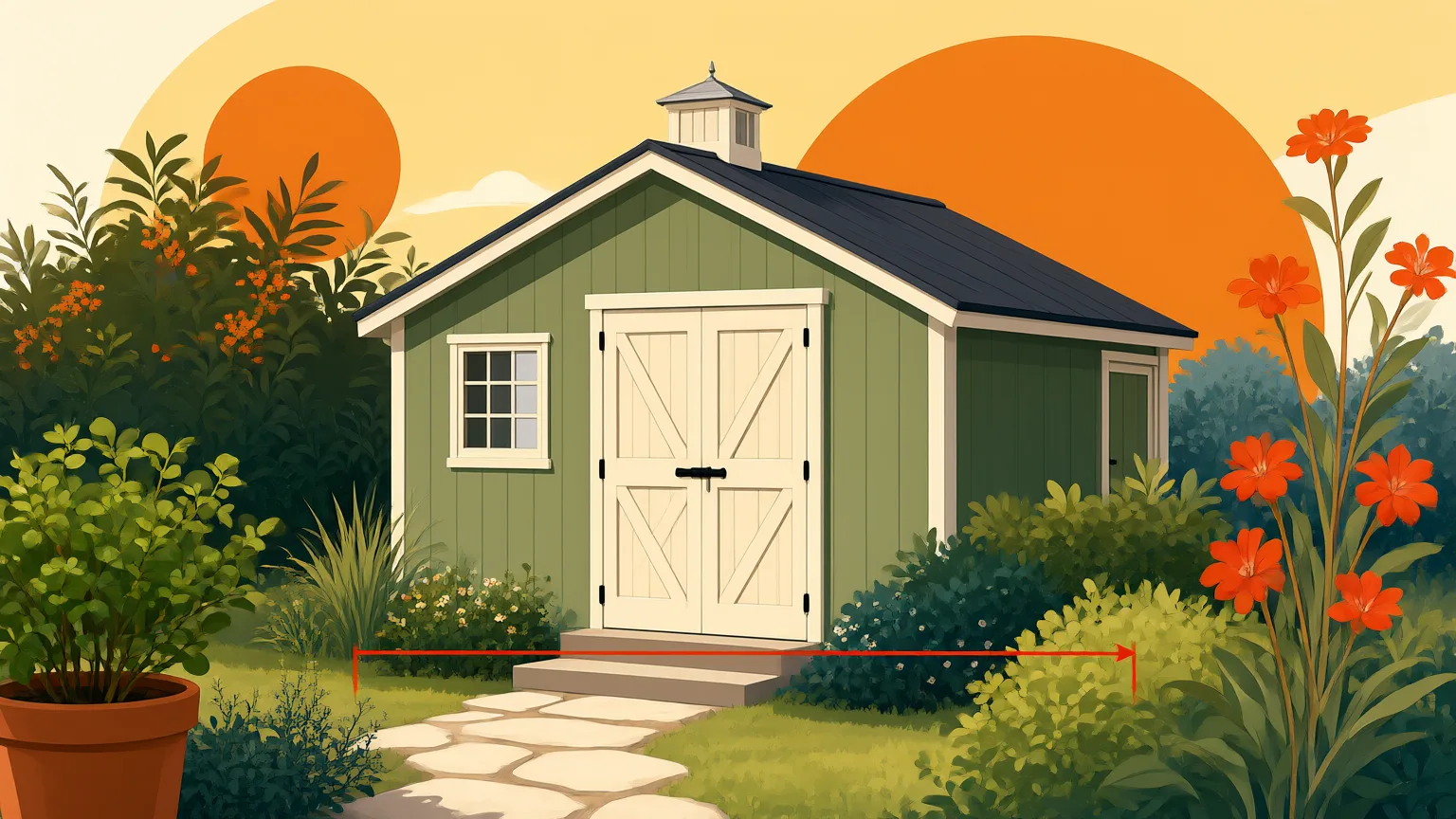
If you have ever stood in a cluttered garage and wondered what is the most common shed size, you are not alone. A popular middle-ground size is 10x12 feet, with 8x10 and 10x12 close behind. That said, the "most common" size is not automatically the right size for your yard, your tools, or your plans.
You will get a simple sizing framework, real dimensions to plan around, and a look at how size affects cost and customization. You can use our 3D designer and size calculator to visualize options before buying.
Key takeaways
- A widely chosen shed size is 10x12 feet, with 8x10 and 12x16 also popular.
- Choosing the right size depends on your storage needs, available space, and local permit rules.
- Larger sheds cost more but often have a lower cost per square foot.
- White Pine Structures offers a 3D designer, size calculator, and permit guides to simplify your decision.
- Visit the Parkesburg, PA lot to see popular sizes and get personalized advice.
On this page
- What Is the Most Common Shed Size?
- Why Shed Size Matters: Beyond Storage
- How to Choose the Right Shed Size for Your Property
- Common Shed Sizes and What They Hold
- How Shed Size Affects Cost and Customization
- Making the Final Decision: Tips and Next Steps
- Frequently asked questions
- Final thoughts
What Is the Most Common Shed Size?
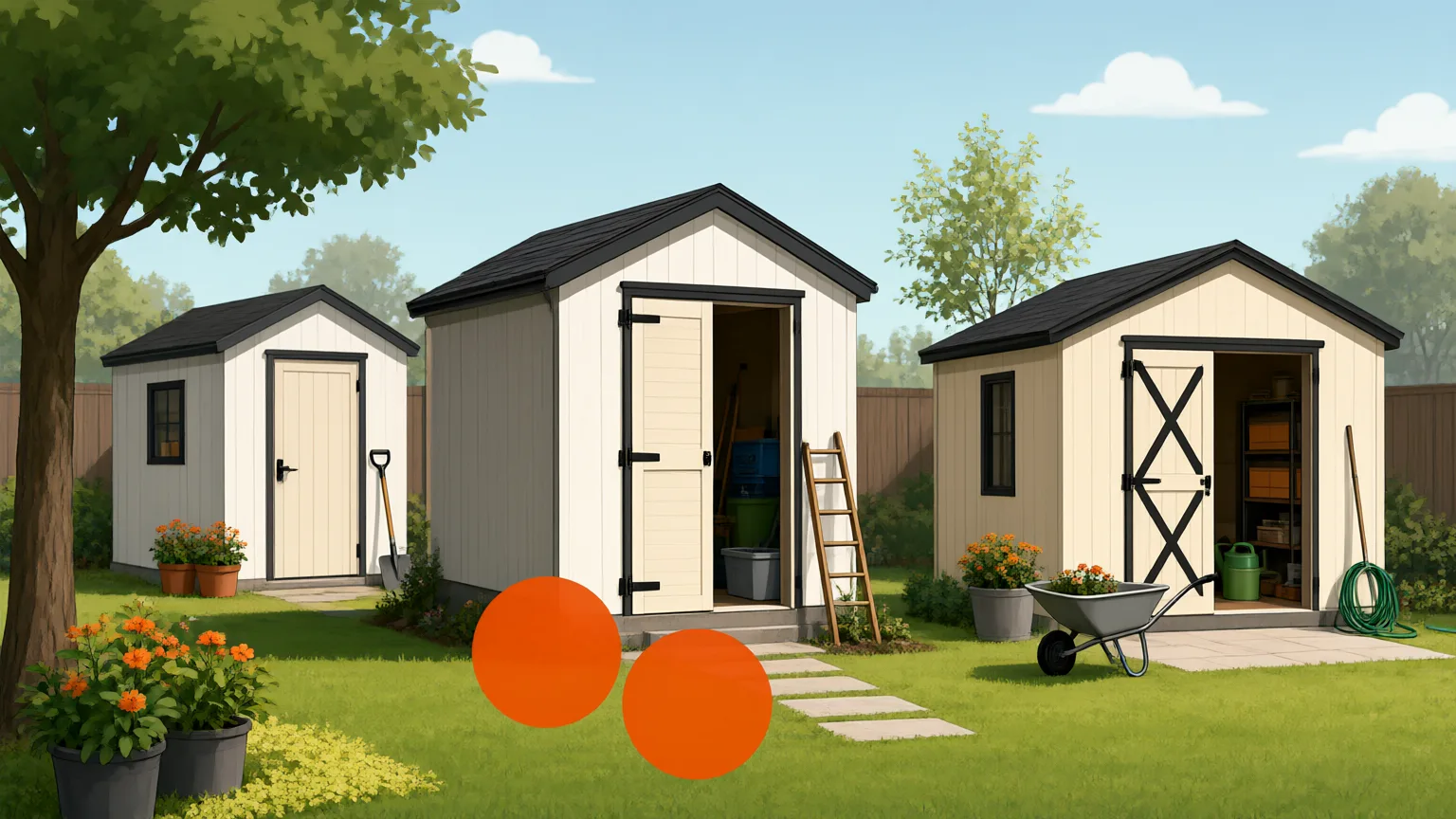
The short answer: 10x12 feet is a very common shed size, with 8x10 and 12x16 close behind. Those three sizes are popular because they hit a practical middle ground between storage capacity, yard footprint, and cost. A 10x12 gives you enough room for lawn equipment, bikes, and seasonal items without swallowing half the backyard, which is why it tends to be the default choice for homeowners who just want a shed that works.
Why 10x12 Is the Sweet Spot
A 10x12 shed offers roughly 120 square feet of floor space. That is enough for:
- A riding mower or push mower, trimmer, and fuel cans
- Long-handled tools, ladders, and a workbench along one wall
- Bikes, patio cushions, holiday bins, and overflow from the garage
It also stays under many common permit thresholds. In Pennsylvania, the state building code generally exempts one-story detached accessory structures under 1,000 square feet, but most municipalities lower that trigger, often to 200 square feet and sometimes as low as 100 or 120.
A 10x12 sits just above those smaller lines, so check your township before you buy. You can check your own numbers with our Shed Size Calculator.
How Regional Preferences Shape Shed Sizes
Where you live nudges the decision. Suburban lots with tighter setbacks and smaller yards often favor 8x10 or 10x12, since the shed has to fit alongside a fence, driveway, or property line. Rural properties with more open space lean toward 12x16 and larger, where the extra room pays off for tractors, feed, firewood, or a workshop corner.
Amish-built sheds from White Pine Structures come in all of these popular sizes, and you can adjust dimensions to fit your lot rather than forcing a standard footprint to work. Knowing why 10x12, 8x10, and 12x16 dominate is the first step toward deciding whether one of them fits your storage or workspace needs.
Why Shed Size Matters: Beyond Storage
The right shed size protects equipment and keeps your yard usable. The right size keeps the floor clear, protects equipment from weather and damp, and leaves you room to walk in, reach the back shelf, and swing a door open without stepping over the mower. If the size is wrong, the shed becomes clutter rather than storage.
The Cost of Guessing Wrong
An undersized shed fills up fast. Once the rake, the bikes, and the leaf blower are in, there is nowhere to stand, so things end up stacked against the walls or left outside. That usually leads to one of two outcomes: a premature replacement or an expensive addition.
An oversized shed does the opposite kind of damage. It eats yard space you could have used for a garden or patio, and it costs more up front for square footage you may never fill.
Permit Implications of Shed Size
Size also decides whether you need a building permit. Many municipalities in PA, NJ, DE, and MD exempt smaller sheds, but the thresholds differ by state and by township. In Pennsylvania, the state code generally exempts one-story detached storage sheds under 1,000 square feet, though most townships lower that to 200 square feet or even 120.
New Jersey requires a construction permit above 200 square feet and a zoning permit in nearly every municipality. Crossing a threshold can add fees and, on larger builds, engineer-stamped drawings. Our PA Shed & Garage Permit Guide walks through how to check your own township.
Planning for Future Storage Needs
Buy for the shed you will need in a few years, not just this season. Ask yourself:
- Will you add shelving or a workbench along one wall?
- Will a riding mower or snow blower join the inventory?
- Do you want loft space for seasonal items?
If you are unsure, our Shed Size Calculator helps you match dimensions to what you actually own and how you plan to use the space.
How to Choose the Right Shed Size for Your Property
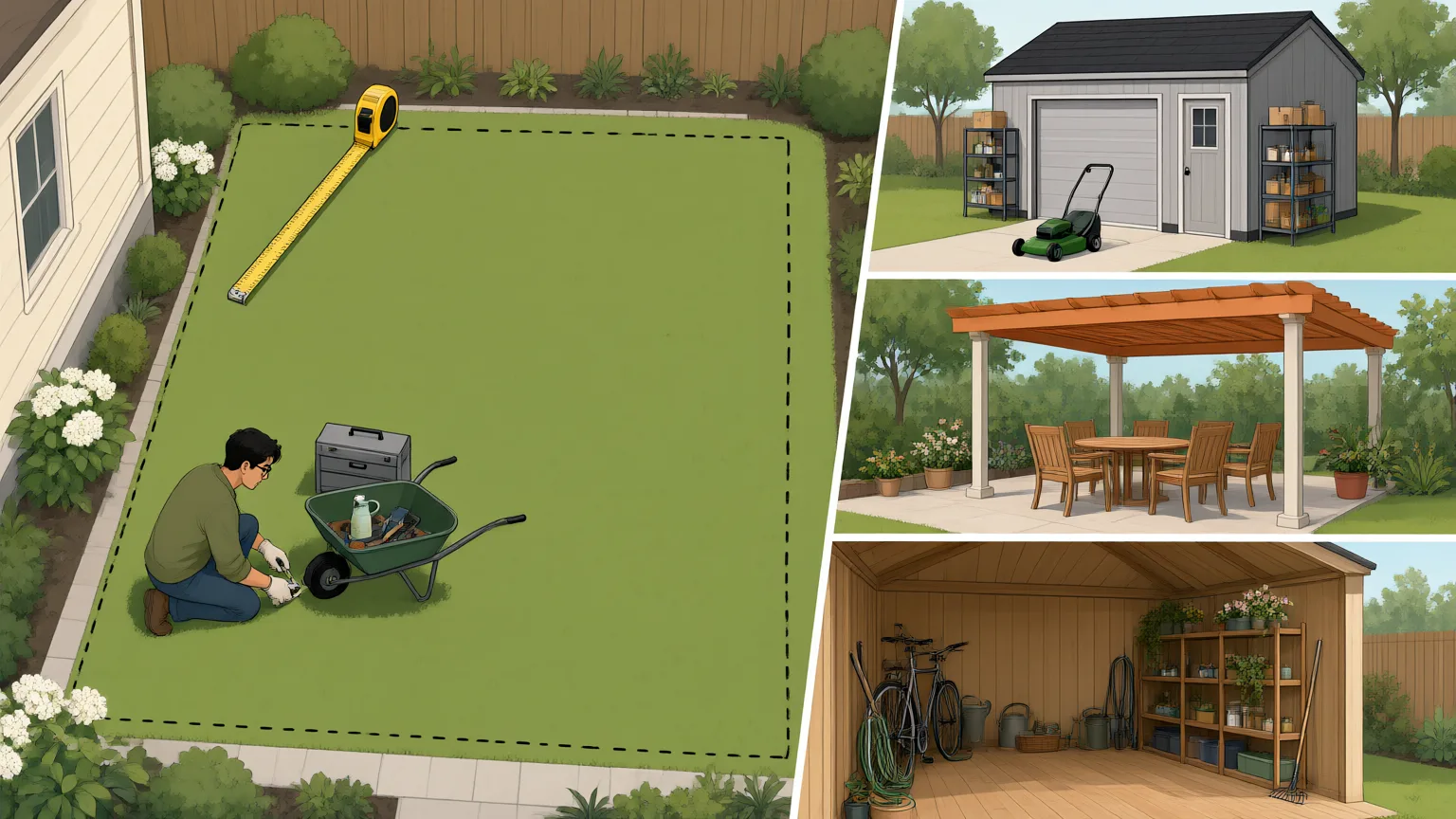
Picking a size comes down to three checks: what you're storing, where the building can physically sit, and what your town will allow. Work through them in that order and you'll avoid the two most common mistakes, buying too small or ordering a building that can't be delivered.
Step 1: Assess Your Storage Inventory
Walk your yard and garage with a notepad and list what will move into the shed, then measure the bulky items rather than guessing.
- Riding mower, snow blower, or wheelbarrow: measure length and width with attachments on.
- Bikes, kayaks, and patio cushions: stackable, but they eat floor space fast.
- Long-handled tools, ladders, and garden carts: these need wall length, not just floor area.
- A workbench or potting table: add roughly 2 feet of depth along one wall.
If the list keeps growing, the Shed Size Calculator turns those items into a suggested footprint.
Step 2: Map Your Yard and Access
Measure the actual pad location, then subtract local setback distances from property lines and any easement you can't build on. Remember that nominal dimensions differ from usable interior space, so plan shelving accordingly.
Delivery matters too. A building has to travel from the truck to the site, so check gate widths, overhead branches, fences, and soft ground along the route.
Door placement and height deserve their own look. A riding mower needs a wide, tall opening, so confirm clear door openings before you commit.
Step 3: Factor in Local Regulations
Zoning and building permits are separate rules, and both can shape your size. A structure is often classified as an accessory building, which means towns may regulate its size, appearance, and distance from boundary lines, as noted in this overview of sheds.
Thresholds vary widely. In Pennsylvania, most municipalities set their own permit trigger, often at 200 square feet or lower, while New Jersey generally requires a construction permit above 200 square feet. Check our state guides for PA and NJ before ordering, and confirm details with your township.
Common Shed Sizes and What They Hold
Shed dimensions are usually written as width by depth, so an 8x10 shed gives you 80 square feet of floor space. That number is the starting point, not the whole story. Wall height, roof style, and door placement decide how much you can actually store and how easily you can move around inside.
Here is how the most common sizes compare.
| Size | Square Feet | Typical Use |
|---|---|---|
| 8x10 | 80 | Garden tools, bikes, small lawn equipment |
| 10x12 | 120 | Riding mower, workbench, seasonal items |
| 12x16 | 192 | Workshop, hobby space, larger-property storage |
| 12x24 | 288 | Single-car garage or serious workshop |
| 14x40 to 16x50 | 560 to 800 | Multi-vehicle storage, commercial use |
Small Sheds: 8x10 and Under
An 8x10 is the practical minimum for most homeowners. It holds a push mower, long-handled tools, bikes, and a few totes, and it fits in tight side yards where a bigger building will not clear the setbacks. Measure your gate and fence line before you commit.
Medium Sheds: 10x12 to 12x16
The 10x12 is one of our most popular sizes, and it is easy to see why. It swallows a riding mower, a workbench, and holiday decorations without forcing you to stack things to the rafters. A 12x16 opens up genuine workshop space, with room for a bench along one wall and a clear path down the middle.
Large Sheds and Garages: 12x24 and Up
A 12x24 works as a single-car garage or a roomy workshop for serious DIY projects. Larger footprints like 14x40 and 16x50 cover multi-vehicle storage or light commercial use.
At this scale, check your municipality's permit threshold first, because many townships draw the line well below 288 square feet. Our Shed Size Calculator can help you match a footprint to your list before you fall in love with a floor plan.
How Shed Size Affects Cost and Customization
Bigger buildings take more lumber, more siding, more roofing, and more labor hours, so the base price climbs with every size step. The trade-off is that the cost per square foot often drops as you go up, since fixed costs like delivery, setup, and the basic frame get spread across more floor area.
That's why a modest jump in size sometimes costs less than you'd expect. Our Shed & Garage Cost Guide walks through how model, size, siding, and roofing each move the number.
Price vs. Size: Finding the Value Point
The best value isn't always the smallest or largest option. It's the size that fits what you'll actually store without leaving half the floor empty. A few things to keep in mind:
- Published starting prices are base configurations, not complete installed project prices.
- Delivery and site preparation can vary with size. Larger buildings may need a concrete pad or gravel foundation, and those costs are separate from the building itself.
- White Pine Structures offers financing and rent-to-own options, which can make a larger shed workable if you genuinely need the space.
- In-stock buildings give you a way to compare real prices across sizes side by side.
Custom Features That Impact Size Choice
Windows, doors, ramps, and loft space all interact with size. A wider door or a ramp may push you toward a larger footprint so equipment fits and moves easily.
A loft adds storage volume without adding ground space, which can let a smaller building do more work. Confirm clear door openings before assuming a mower or ATV will fit.
If you're weighing options, our 3D building designer lets you see how size and features combine before you commit.
Making the Final Decision: Tips and Next Steps
You've weighed the sizes, checked your budget, and thought about how you'll use the space. Now it's time to lock in a decision. A few practical steps will help you commit with confidence.
Start by pulling out your inventory list and measuring one more time. Walk the items you plan to store and confirm the real footprint of anything bulky, like a riding mower or a workbench.
If your count lands between two sizes, go slightly larger. A little extra room is far easier to live with than a building that's too tight from day one.
See Sizes in Person at Our Parkesburg Lot
Numbers on a page don't tell the whole story. Visit our display lot in Parkesburg, PA, to stand inside popular sizes and compare construction quality side by side. You'll get a real feel for how a 10x12 or 12x16 fits your plans, and you can ask questions face to face.
Use Our Free Planning Tools
Before you commit, try our online 3D building designer to experiment with sizes, colors, and options. It's a low-pressure way to see how your choices come together. Then request a free photo and address review for personalized advice on size and placement.
Finally, check our state permit guides for PA, NJ, DE, or MD and review the site preparation requirements so installation goes smoothly. A written quote will confirm your final pricing.
Frequently asked questions
What is the most common shed size?
A very common shed size is 10x12 feet. It is the middle ground that fits most suburban backyards, holds lawn equipment, bikes, and seasonal items, and still leaves room to move around inside. Many buyers start there, then size up to 12x16 if they need a workspace or more shelving.
Is a 10x10 or 10x12 shed better for a typical backyard?
A 10x12 is usually the better pick if your yard allows it. The extra two feet of depth gives you a real walking aisle and room for a shelf or workbench. A 10x10 works when space is tight or your local rules limit footprint, but it fills up fast once you add a mower and bikes.
How much usable space do you actually get inside a shed?
Less than the nominal size suggests. A 10x12 shed measures 10 by 12 feet on the outside, so wall thickness, framing, and door swing reduce usable interior space. Plan storage around the clear floor area, and confirm clear door openings before assuming a riding mower or snowblower will fit through.
What size shed do you need for a riding mower or workshop?
For a riding mower plus garden tools, 10x12 is a common minimum, and 12x16 gives comfortable clearance. If you want a true workshop with a bench and room to stand back from a table saw, look at 12x20 or larger. Measure your equipment first, including attachments and deck width.
Final thoughts
If you remember one thing, make it this: 10x12 feet is a very common shed size, and 8x10 is a popular small one. Those dimensions cover most lawn equipment, tools, bikes, and seasonal storage without wasting yard space. Your right size still depends on what you're storing, your door clearances, and your local permit rules.
The easiest next step is to see real buildings rather than guess from a chart. Explore our sheds and garages at White Pine Structures, compare sizes and layouts, and use the 3D designer to test a footprint before you commit.
Explore our sheds and garages whitepinestructures.com/