How Much Does a Shed Cost in 2026? Real Prices & Factors
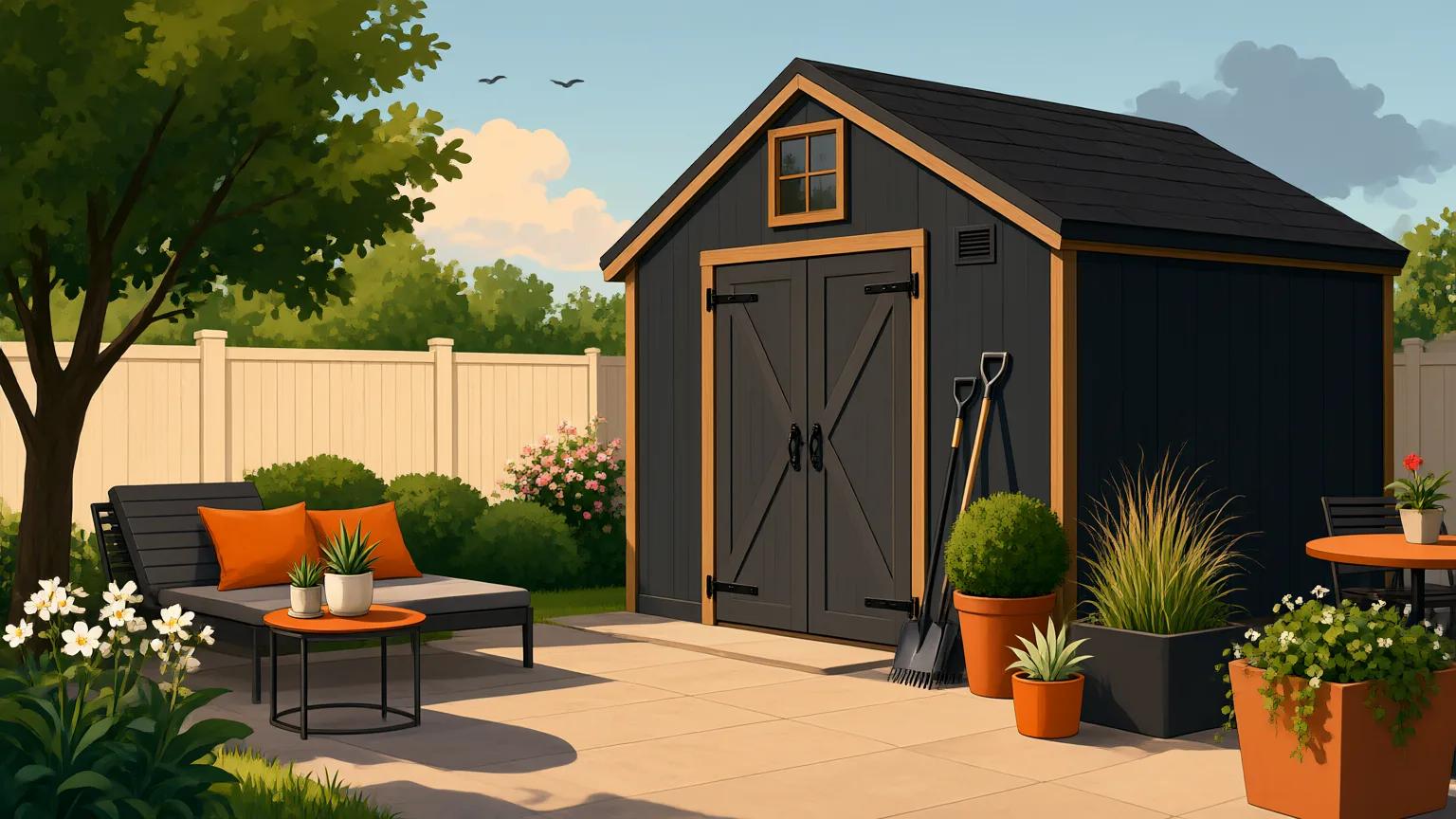
If you’ve searched for how much a shed costs in 2026, you likely found a national average covering everything from basic kits to finished workshops. That range is too broad to help you set a realistic budget.
Shed pricing depends on size, style, siding, roofing, doors, windows, flooring, your foundation, and how far the building has to travel to reach you. Two sheds that look similar online can differ by thousands of dollars once those choices are made.
We break down 2026 prices by size and style, explain the key cost drivers, and cover regional factors for PA, NJ, DE, and MD buyers.
Key takeaways
- A standard wooden shed can range from a few thousand dollars for a small basic model to well over $10,000 for a large one, depending on size, style, and options.
- Material choices, site prep, delivery distance, and permits are the biggest cost drivers beyond the base shed price.
- Regional factors in PA, NJ, DE, and MD, like permit rules and delivery fees, can add hundreds to your total project cost.
- Use our 3D designer and Shed Size Calculator to estimate costs before requesting a formal quote.
- A free site review helps identify access issues that affect delivery pricing.
On this page
- What a Shed Actually Costs in 2026: Price Ranges by Size and Style
- Why Shed Prices Are What They Are: The 7 Biggest Cost Drivers
- How to Budget for a Shed in 2026: A Step-by-Step Example
- Regional Cost Factors in PA, NJ, DE, and MD
- Comparing Shed Types: Which One Fits Your Budget and Needs?
- How to Get an Accurate Shed Quote in 2026 (and Avoid Surprises)
- Frequently asked questions
- Final thoughts
What a Shed Actually Costs in 2026: Price Ranges by Size and Style
Mid-Atlantic buyers should expect a wide price range for standard wooden sheds in 2026, from small basic models to large custom builds. Amish-built structures typically command higher prices due to durable materials and skilled craftsmanship.
Here's how the numbers break down by size.
Typical 2026 price ranges for common shed sizes
| Size | Typical range | Best for |
|---|---|---|
| 8x10 | $2,800 – $4,500 | Lawn equipment, bikes, basic garden storage |
| 10x12 | $4,500 – $7,500 | Riding mower, tools, seasonal overflow |
| 12x16 or larger | $7,500 – $12,000+ | Workshop space, long-term storage, hobby use |
These are typical ranges for the Mid-Atlantic region, covering PA, NJ, DE, and MD. Your exact quote depends on the options you pick, how far the building travels, and what your site needs before delivery.
Two main factors determine where your quote falls within these ranges:
- Base configuration vs. finished project. Published starting prices cover a base building, not a complete installed project. Foundation work, delivery travel, and site prep are separate.
- Options add up. Windows, doors, flooring upgrades, and siding choices all change the total.
How style changes the price per square foot
Style impacts cost per square foot. Simple designs like lean-tos use less material and labor than complex gambrel roofs.
- Lean-to: The most economical option. A single slope, no complex framing.
- Gable (A-frame): The standard choice. Simple peak, straightforward construction.
- Gambrel: Two slopes per side, which opens up loft space and headroom without a bigger footprint. More framing means more cost.
- Mini barn: Built fully assembled, with a gambrel roof and a taller profile. Expect to pay more per square foot than a basic gable.
Our online 3D designer lets you adjust size, style, and options to see how they impact the total price instantly. Experiment with configurations, then request a quote for the layout that fits your needs.
Why Shed Prices Are What They Are: The 7 Biggest Cost Drivers
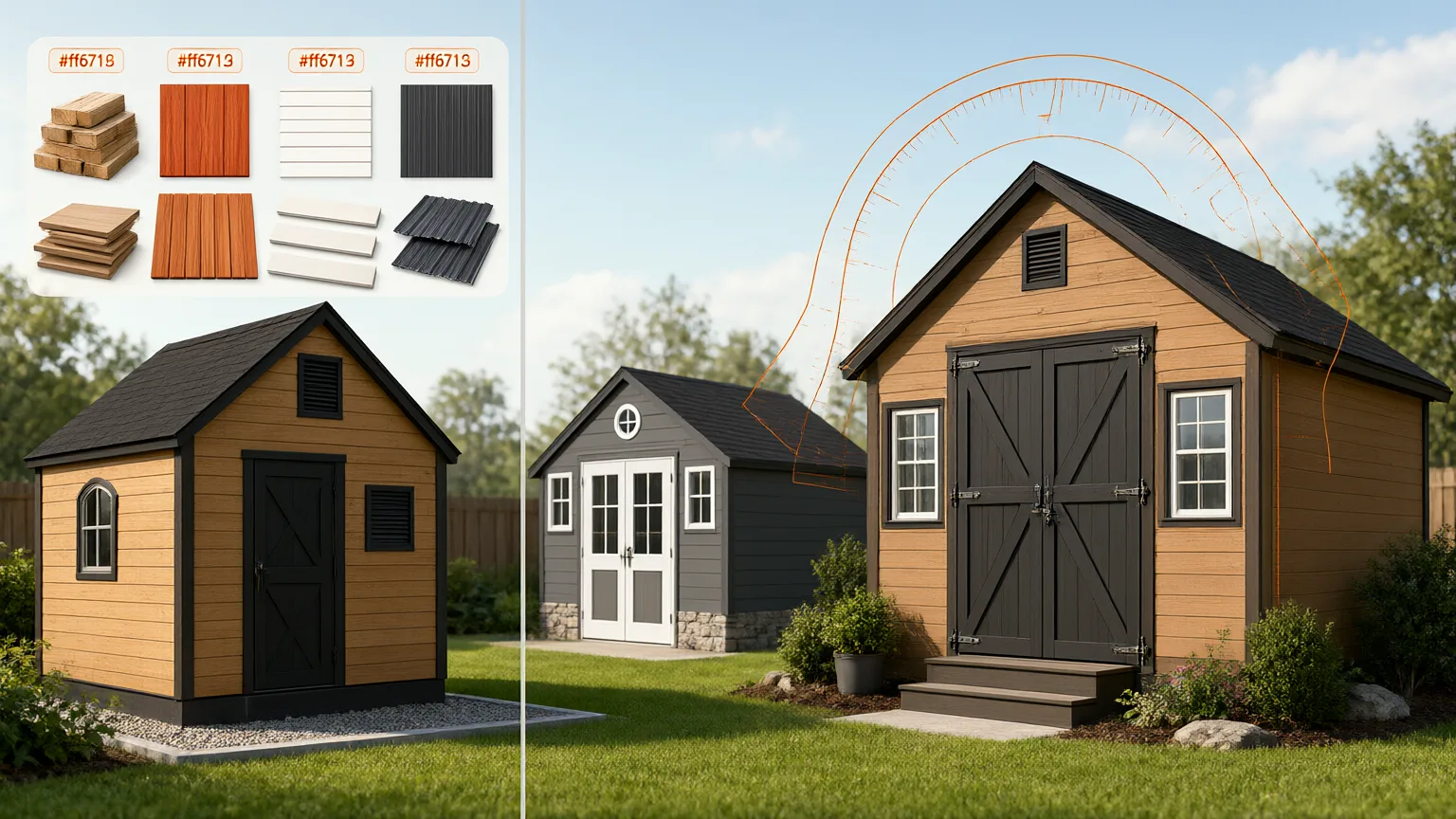
Two 10x12 sheds can sit $3,000 apart on a quote sheet and both be priced fairly. The gap comes down to seven drivers: materials, size and height, options, site prep, delivery, permits, and how the building is constructed.
Materials and construction quality
Siding, flooring, and roofing choices can move the price noticeably on a comparable building. The main trade-offs:
- Pressure-treated pine: The budget standard. It resists ground contact and rot, but it needs paint or stain and more upkeep over time.
- Cedar: Naturally decay-resistant and takes finish beautifully. You pay more up front for the material itself.
- Vinyl: Little to no painting, but a higher initial cost and fewer repair options if a panel is damaged.
- Metal: Fast to install and low maintenance, though it can dent and offers less design flexibility.
Flooring and roofing follow the same logic. A building with ¾-inch tongue-and-groove flooring or LP ProStruct decking with SmartFinish costs more than one with standard plywood decking.
Architectural shingles outlast basic three-tab. Note that pressure-treated foundation runners and joists do not mean the plywood decking above them is pressure-treated.
Size, options, and customization
A bigger footprint or taller walls means more lumber, siding, and shingles, plus longer delivery and possibly a different permit threshold. Add-ons stack up quickly:
- Windows: priced per unit, and they add up
- Extra doors or a double door: an added cost per door
- Ramps: an added cost
- Lofts: an added cost
- Workbenches: an added cost
- Electrical packages: an added cost, and they can affect permit requirements
- Insulation: an added cost
None of these are required, but each one you check changes the total.
Site prep, delivery, and permits
The building needs a level, well-drained foundation and a clear delivery route. Gravel pads and concrete slabs are quoted separately, and tight gates, slopes, or soft ground can add fees or rule out certain delivery methods.
White Pine Structures publishes a stone-pad travel charge of $6.00 per mile, one way from Parkesburg, and that is additional to installation. Concrete foundation pricing applies within 50 miles of Parkesburg, with a separate mileage surcharge beyond that.
Permits and zoning come next. Some municipalities require a permit or enforce setback rules that change where the shed can sit, which can affect both cost and timeline. Our PA permit guide walks through how much that varies township to township.
Finally, labor and method matter. Amish-built modular structures often cost more up front than a DIY kit, but the framing, fit, and finish tend to hold up longer, which spreads that cost over more years of use.
How to Budget for a Shed in 2026: A Step-by-Step Example
A budget is just a list of decisions with dollar amounts attached. Here's one realistic scenario, start to finish.
Example: 10x14 gable shed in Chester County, PA
A homeowner wants a 10x14 gable shed with one window, a ramp for a riding mower, and delivery from Parkesburg. The line-item budget looks like this:
- Base shed (10x14 gable): [your quoted base price]
- Window: [your quoted option price]
- Ramp: $180
- Delivery and setup travel: [calculated from the published per-mile rate]
- Site prep (gravel pad): [your quoted site prep price]
- Permit, if required: [your township's fee]
- Total: add up your quoted line items
Treat every number as an estimate until you have a written quote. The permit line is the one that moves most: under the PA Uniform Construction Code, one-story detached storage sheds under 1,000 square feet are generally exempt from a building permit, but most municipalities have lowered that threshold, often to 200 square feet.
Zoning and setback rules still apply at any size, so check with your township before you order. Our PA Shed & Garage Permit Guide walks through the details.
Using online tools to refine your budget
Before you commit, use the Shed Size Calculator to confirm 10x14 actually fits what you're storing, then open the 3D building designer to test window placement, door styles, and siding choices and see how each one shifts the price. Adjusting size or options in the designer is free; changing them after delivery is not.
Two ways to spend less:
- In-stock buildings can sometimes cost less than a custom order and arrive faster, though your size, color, and option choices are limited to what's on the lot.
- Used sheds are another budget option, and we list used sheds for sale as they become available.
Regional Cost Factors in PA, NJ, DE, and MD
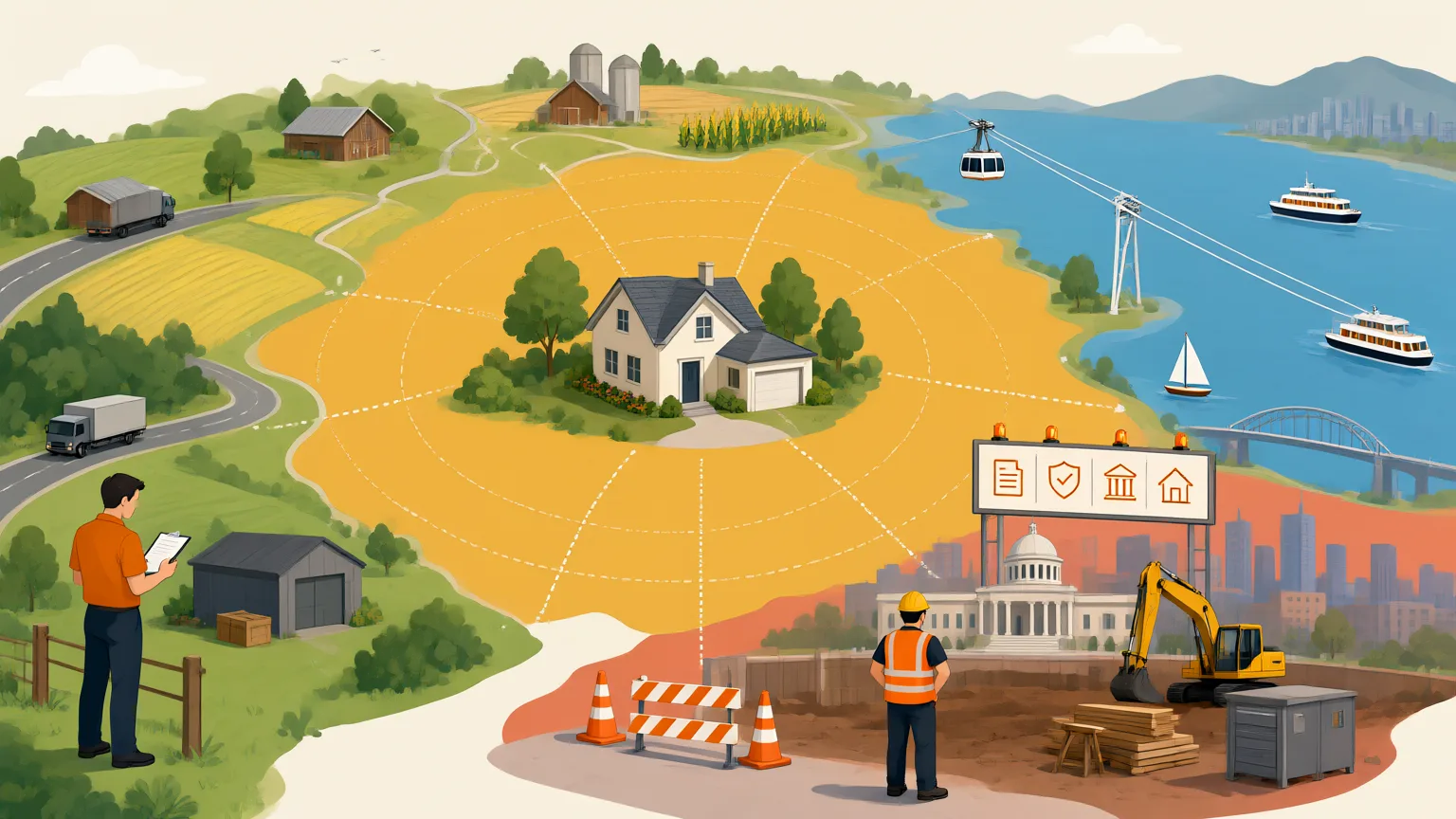
The same building can land at different bottom lines depending on where you live. Delivery, permits, weather ratings, and your own ground conditions all shift the total.
Delivery and logistics
White Pine Structures delivers from Parkesburg, PA across all four states, so your one-way driving distance drives the travel charge. On a stone-pad build, the published Delivery & Setup Travel charge is $6.00 per mile, and it's additional to installation.
Concrete foundation pricing is published for sites within 50 miles of Parkesburg; beyond that, a separate Concrete Foundation Mileage Surcharge table applies. The stone-pad per-mile rate doesn't cover concrete work.
Longer NJ and DE runs can also mean tolls or a ferry crossing, and an accessible route matters. A tight driveway or low branch may need a smaller delivery vehicle or extra handling. Ask for a free photo and address review before you commit.
Permits and zoning by state
Permit costs and rules vary by state and municipality, so treat these as examples only:
- PA: Township permits often run $50 to $150. The state generally exempts one-story detached sheds under 1,000 square feet, but many townships lower that to 200 square feet or even 120.
- NJ: Zoning permits are standard in nearly every municipality. A construction permit kicks in above 200 square feet, over 10 feet tall, or with any electrical or plumbing.
- DE and MD: Each has its own thresholds and zoning rules, so check locally.
Snow load and wind ratings may require upgrades in some areas, adding cost. Rocky ground, slopes, or HOA restrictions can raise site prep too. Our state-specific permit guides (start with the PA Shed & Garage Permit Guide) walk you through the local steps.
Comparing Shed Types: Which One Fits Your Budget and Needs?
The type of building you choose moves the price more than any single option. Here's how the four main categories compare.
Storage sheds vs. garages vs. mini barns
- Storage shed: The lowest-cost option. It gives basic, weather-tight protection for tools, lawn equipment, bikes, and seasonal items. If your goal is simply getting clutter out of the garage or house, this is usually where your budget stretches furthest.
- Garage: A higher-cost build made for vehicles, with a larger footprint and, in most cases, a concrete pad. Depending on size and options, garage prices generally start around $12,000 to $25,000 and up. If you're weighing one against the other, our Shed vs. Garage guide walks through the trade-offs.
- Mini barn: A mid-range pick that adds loft storage and a distinctive look. The gambrel roof creates far more headroom and storage volume without a bigger footprint, which is why mini barns are popular on hobby farms and in workshops.
When custom is worth the extra cost
A custom outdoor building is the highest-cost route, and it earns that price when you need something specific: a studio, a backyard office, or commercial storage. You're paying for a layout tailored to how you'll actually use the space, not just square footage.
White Pine Structures builds all four types, and browsing the in-stock inventory is one of the fastest ways to compare real prices side by side before you commit.
How to Get an Accurate Shed Quote in 2026 (and Avoid Surprises)
A quote is only as good as the information behind it. The more you tell a builder up front, the fewer line items show up later as "extras."
Information to gather before requesting a quote
Have these ready before you call or fill out a form:
- Desired size and style, plus how you plan to use the building
- Options you want: windows, doors, siding, roofing, flooring, lofts
- Your site address, so the builder can review access and placement
- Any known site issues, like slope, drainage, or tight gates
Tools can shortcut this step. White Pine Structures offers a 3D building designer, published pricing, and a Shed Size Calculator, so you can land on a realistic size and configuration before you ever talk to a person. You can also request a free photo and address review, which helps us spot site-specific issues early and quote more precisely.
Questions to ask every shed builder
- Is delivery included, and how is it calculated?
- Who handles site prep, and what does it cost?
- Are permits required, and who files them?
- What foundation does this model need?
- What exactly does this price cover?
Compare quotes line by line, not by total. A lower number that excludes delivery, site prep, or permit fees is not actually lower.
Finally, check current inventory. In-stock buildings can mean faster delivery and, with in-stock discounts, a lower price. A formal written quote is what establishes your project pricing, so ask for one before you commit.
Frequently asked questions
How much does a shed cost in 2026?
In 2026, backyard shed prices span a wide range, with small basic models at the low end and large custom buildings well above. White Pine Structures publishes starting prices that reflect base configurations, not complete installed project prices. Your final number depends on size, siding, roofing, options, foundation, and delivery, so treat any starting price as a floor rather than a total.
What size shed can you get for around $5,000?
A mid-size storage shed, often in the 8x10 to 10x12 range, is a common budget target, depending on style and options. A basic A-frame or storage barn with standard siding and shingles fits that budget more easily than a tall barn with extra windows and doors. Nominal dimensions differ from usable interior space, so confirm what you plan to store before choosing.
How much does a two-car garage cost in 2026?
A two-car garage generally costs more than a shed because it involves a larger footprint, taller walls, and often a concrete foundation. White Pine Structures offers one- and two-car garages, modular garages, and workshop garages, with pricing that varies by size, siding, roofing, and layout. Concrete foundation prices apply within 50 miles of Parkesburg, with a separate mileage surcharge beyond that.
What extra costs should you budget for beyond the shed price?
Budget separately for site preparation, foundation, delivery, permits, and any electrical work. White Pine Structures charges a published stone-pad Delivery and Setup Travel rate of $6.00 per mile using one-way driving distance from Parkesburg, and that travel charge is additional to installation. Concrete foundation pricing follows its own mileage table, and the stone-pad per-mile rate does not apply to concrete work.
Final thoughts
Shed prices in 2026 come down to size, style, siding, roofing, and the options you choose, plus the foundation and site work your yard needs. Two buyers can pick the same footprint and land on very different totals, which is why a written quote matters more than any starting price.
The clearest next step is to explore our sheds and garages, then try the 3D building designer to match a layout to your space. When you are ready, request a free photo and address review so we can flag access or foundation questions early.
Explore our sheds and garages whitepinestructures.com/