Storage Unit vs Backyard Shed Cost: Which Wins?
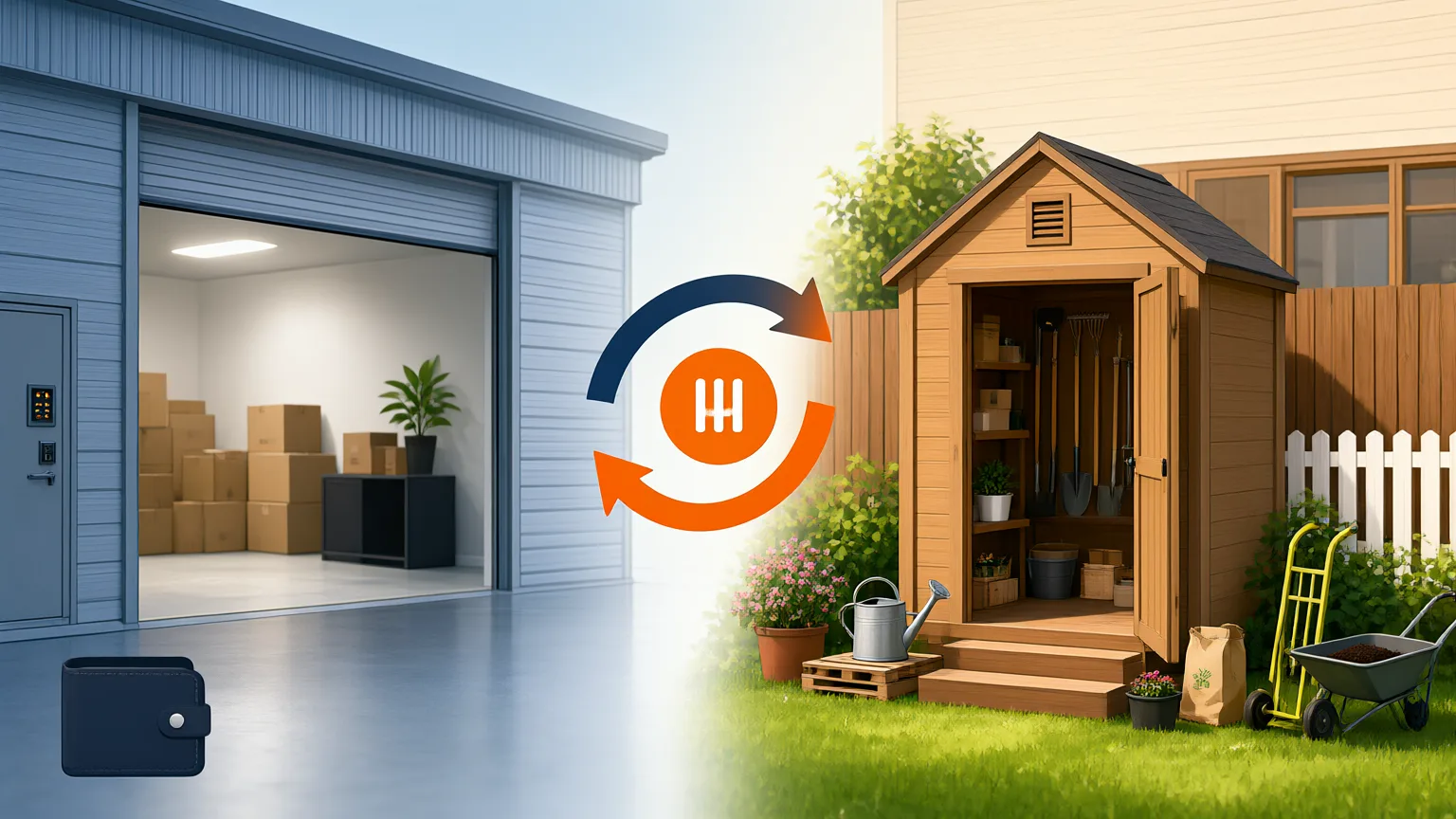
When you compare storage unit vs backyard shed cost, the monthly rent check is only part of the story. The real difference shows up over five, ten, and fifteen years, once you add up upfront spending, recurring fees, lifespan, and what each option is worth at the end.
That is what this comparison covers. We break the decision into five pieces: what you pay on day one, what you keep paying every month, how much usable space you actually get, the hidden costs and local rules that surprise people, and the long-term value each choice builds or loses. You will see where the break-even point tends to fall and which option fits which situation, whether you are clearing out a garage, storing lawn equipment, or adding workspace in Pennsylvania, New Jersey, Delaware, or Maryland.
Key takeaways
- Storage units are often cheaper for short-term needs, but backyard sheds tend to win on total cost once you keep the space for several years.
- A storage unit's rent accumulates significantly over time, while a shed involves a larger upfront cost with lower ongoing expenses.
- A shed adds usable space and a permanent improvement to your property; a storage unit builds neither.
- Permits, site prep, and delivery are frequent additional costs that require planning.
- White Pine Structures offers pricing tools, a 3D designer, permit guides, and delivery across PA, NJ, DE, and MD.
On this page
- Storage Unit vs Backyard Shed: The Real Cost Comparison
- Upfront Costs: What You Pay on Day One
- Monthly and Recurring Costs Over Time
- Capacity, Size, and What You Can Actually Store
- Hidden Costs, Permits, and Local Rules
- Long-Term Value, Resale, and the Verdict by Use Case
- Frequently asked questions
- Final thoughts
Storage Unit vs Backyard Shed: The Real Cost Comparison
You are weighing two ways to get stuff out of the house: rent space somewhere else, or build space in your own yard. The "storage unit vs backyard shed cost" question is really about total cost of ownership, not the number on the first bill.
The short answer: storage units win for short-term, low-volume, or temporary needs. Backyard sheds win for long-term storage, workshops, and property value.
If you need a place for six months of overflow while you renovate, rent. If you need somewhere to park the mower, the bikes, the tools, and the holiday bins for the next fifteen years, building usually costs less per year and leaves you with an asset.
Why This Comparison Matters for Homeowners
A storage unit is a subscription. Stop paying, and your access stops.
A shed is a one-time project with ongoing upkeep, and it stays on your property when you sell. Comparing a monthly rate to a purchase price without doing the math over time is how people end up paying for ten years of storage and having nothing to show for it.
This guide is written for homeowners in PA, NJ, DE, and MD. Climate, zoning, and delivery costs all shift the math in this region, which is why the same comparison plays out differently here than in a mild, low-regulation market.
The Three Cost Buckets: Upfront, Recurring, and Long-Term
Compare both options across all three:
- Upfront cost. First month plus deposit and a lock for a unit. Site prep, the building itself, delivery, and any permits for a shed.
- Recurring cost. Monthly rent, which tends to rise over time. For a shed, maintenance, occasional repairs, and the value of your own time.
- Long-term value. A storage unit returns nothing at resale. A well-built shed can add usable function and curb appeal, and it lasts for decades with care.
For a deeper walkthrough of the rental side, our Storage Unit vs. Shed guide covers the trade-offs in more detail.
Upfront Costs: What You Pay on Day One
Day-one costs look wildly different between the two options. A storage unit asks for a small, quick payment and hands you a key. A shed asks for a much larger payment, but you are buying an asset instead of renting space.
Storage Unit Move-In Costs
Most facilities want the first month's rent plus a few add-ons before you load a single box:
- First month's rent, which varies by unit size and market
- Security deposit, which varies by facility
- Administration fee, which varies by facility
- A lock, and some facilities require you to buy theirs
- A moving truck rental if you do not own a vehicle big enough
Add it up and a typical move-in is a modest one-time payment. That is the appeal: low commitment, low cash up front.
Shed Purchase, Delivery, and Site Prep Costs
A backyard shed front-loads the spending. Here is how the pieces stack up:
| Cost Item | Storage Unit | Backyard Shed |
|---|---|---|
| Upfront payment | $50 to $300 move-in | Building price plus delivery and prep |
| Typical starting range | First month plus fees | $2,500 to $6,000 for a small Amish-built shed |
| Larger structures | Not applicable | $8,000 to $25,000+ for a garage or mini barn |
| Site preparation | None | Gravel or concrete pad, customer responsibility or quoted separately |
| Permits | None | Varies by state and municipality |
For sheds, site prep and permits are the two costs buyers most often underestimate. A level, well-drained foundation is not optional, and White Pine Structures can arrange professional stone or concrete pad installation through trusted partners or let you handle prep yourself to the building's requirements.
Building prices depend on model, size, siding, roofing, and options, and published starting prices are base configurations, not complete installed project totals. To price a shed before committing, you can use our Shed & Garage Cost Guide alongside the online 3D building designer, which lets you configure size and options and see where the number lands.
Monthly and Recurring Costs Over Time
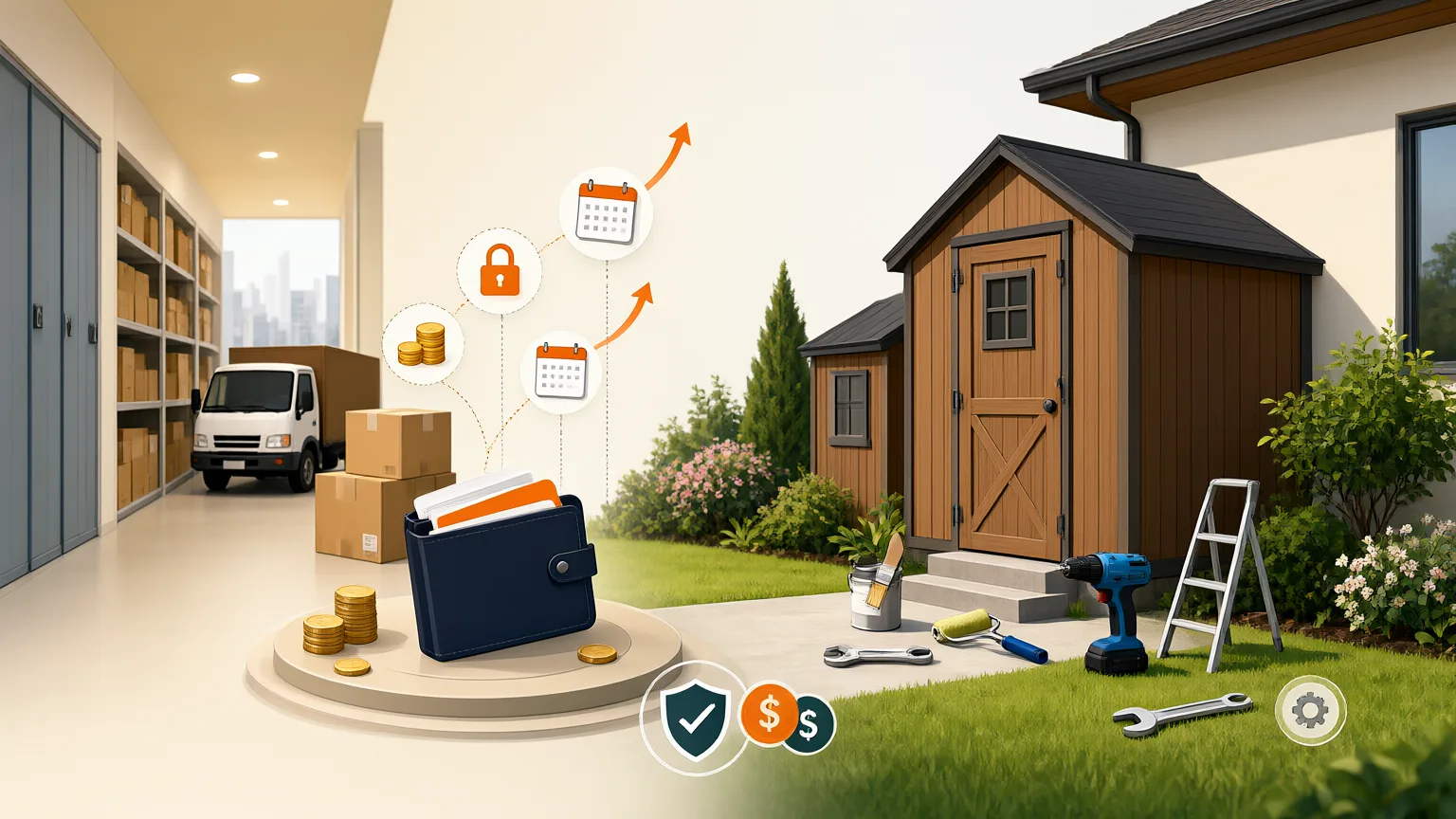
A storage unit never stops billing you. A shed bills you once, then asks for a little maintenance now and then. That difference is where the math gets interesting.
Storage Unit Rent, Insurance, and Increases
Expect these recurring charges with a rented unit:
- Monthly rent: roughly $40 to $250 or more, depending on size, location, and whether it is climate controlled.
- Insurance: often $10 to $30 per month, either required by the facility or worth carrying for your contents.
- Annual increases: rent commonly climbs 5 to 10 percent per year, and many leases allow it with limited notice.
That last point matters more than the sticker price. A unit that starts at $75 per month does not stay at $75.
Shed Maintenance and the Break-Even Point
Once a shed is paid for, your monthly storage cost is essentially $0. What remains is upkeep: staining or sealing, roof checks, and minor repairs, which typically average $50 to $150 per year.
To estimate your break-even, multiply your local monthly rent by 12, then compare that annual figure against your shed's total installed cost divided by the number of years you plan to keep it.
Because storage rent tends to rise, the break-even point usually arrives sooner than buyers expect, often within 3 to 6 years. If you want to shorten that window further, in-stock sheds and used sheds at White Pine Structures can lower the upfront number, and our Shed & Garage Cost Guide walks through current pricing.
Capacity, Size, and What You Can Actually Store
A storage unit sells you floor space and little else. A shed gives you floor space plus the freedom to stack, shelve, and walk in with a wheelbarrow. That difference matters more than the square footage on the lease.
Square Footage and Access Compared
Here is how the common sizes line up:
- 5x5 storage unit: about 25 square feet, roughly a closet. Enough for seasonal bins, not much more.
- 8x10 shed: about 80 square feet. Handles lawn equipment, bikes, and shelving along one wall.
- 10x16 shed: about 160 square feet. Fits a workbench, a mower, and organized storage without Tetris.
- 12x24 garage: about 288 square feet. Room for a vehicle plus storage or a work area.
Storage units are vertical and access-limited. You work around whatever the previous tenant stacked, and you rarely get drive-up parking.
A shed lets you add shelving, hang tools, install a workbench, and in garage models drive equipment or a vehicle straight in. Remember that nominal dimensions differ from usable interior space, so confirm clear door openings before assuming a riding mower or ATV fits.
Choosing the Right Size for Your Needs
For many households, a 10x12 or 10x16 shed replaces a 10x10 storage unit plus a garage bay, which frees the garage for parking. Mini barns and garages do double duty as storage, workshop, and vehicle space in a way a rented unit cannot.
If you are unsure where to start, our Shed Size Calculator matches a building size to what you actually plan to store.
For a side-by-side look at how these two options compare on cost and flexibility, see our Storage Unit vs. Shed guide.
Hidden Costs, Permits, and Local Rules
The advertised price is rarely the whole price. Both options carry costs that show up after you have already committed, and the shed side of the ledger is the one you can actually plan for.
Storage Unit Fees People Forget
Monthly rent is the starting point, not the total. Watch for:
- Climate control premiums. A temperature-controlled unit costs meaningfully more per month than a standard drive-up unit.
- Insurance. Many facilities require you to carry a policy or buy theirs.
- Late fees and rate increases. Month-to-month leases let operators raise rent with short notice.
- Fuel and time. Every trip to the facility costs you both, and those trips never stop.
Shed Permits, HOA Rules, and Site Prep
Permit rules vary by state and municipality, so there is no single threshold to memorize. Pennsylvania state codes may exempt certain small structures, but municipal zoning ordinances often impose stricter limits or permit requirements regardless of size. New Jersey regulations often require zoning permits for sheds, with construction permits potentially required based on size and local rules.
Budget for HOA architectural approval, zoning setbacks, and permit fees, which vary by municipality. Site prep is the other wildcard: an uneven, wet, or sloped spot needs grading, a stone pad, or a concrete pad before delivery.
White Pine Structures publishes state-specific permit guides for PA, NJ, DE, and MD, plus site preparation resources, so you can check your local rules before you buy. Delivery distance also affects cost. We deliver across all four states from Parkesburg, Pennsylvania, and the published stone-pad travel charge is $6.00 per mile one way.
Long-Term Value, Resale, and the Verdict by Use Case
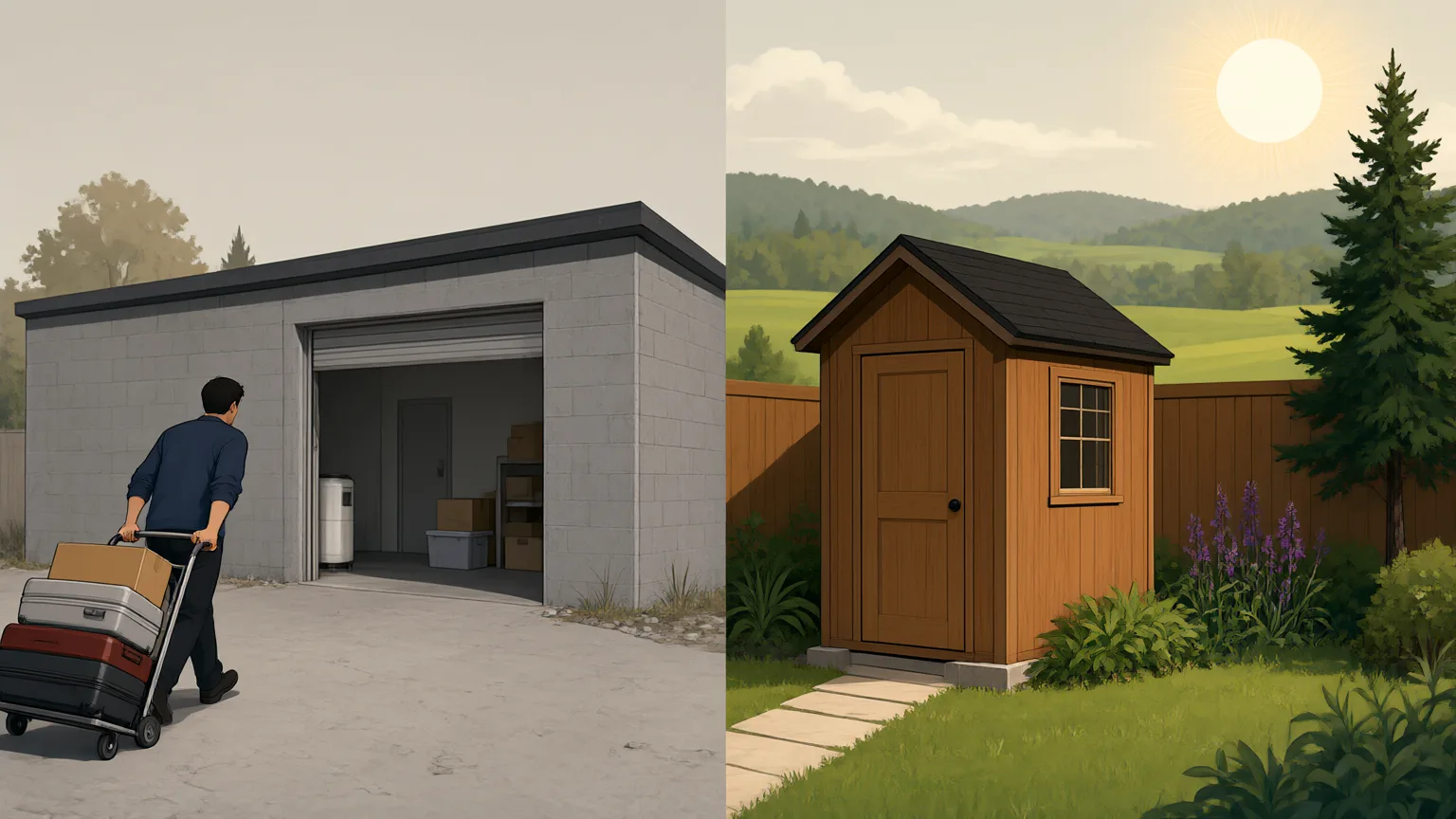
A storage unit offers no long-term asset retention. A shed is a permanent improvement that adds usable space and may contribute to property appeal. Buyers tend to notice a well-kept outbuilding, especially one that works as storage, a workshop, or covered parking.
Resale Value and Lifespan
Our Amish-built sheds are constructed for durability and can last for decades with basic maintenance: keeping the roof and siding sound, the doors adjusted, and the building on a level, well-drained foundation. A storage unit never earns back a dollar of what you pay. A shed that stays in good shape keeps working for decades and stays with the property when you sell.
Which Option Wins for Your Situation
- Short-term or temporary storage: a storage unit. No site prep, no permits, and you can walk away when you are done.
- Long-term household storage: a shed. You stop paying rent and gain a permanent asset.
- Workshop, hobby space, or vehicle parking: a shed or garage. If you are weighing the two, our shed vs. garage guide walks through the trade-offs.
- Business inventory: a shed or garage once volume is high enough that monthly unit rent outweighs the cost of building.
To find the right fit, you can compare a quote, request a free photo and address review, and browse 52 in-stock sheds, garages, and barns.
Here is the simple decision rule: if you will need the space for the long haul, the shed usually wins on total cost.
Frequently asked questions
Is a backyard shed cheaper than renting a storage unit?
Over time, usually yes. A storage unit is a monthly bill you never stop paying, while a shed is a one-time purchase with a long service life. Break-even often arrives sooner than people expect, depending on unit size, local rent, and the shed you choose. After that, the shed keeps saving you money every month.
How much does a storage unit cost per month?
Rates vary widely by region, unit size, and whether the unit is climate controlled. Expect the lowest prices for small, drive-up, non-climate units and the highest for large, indoor, climate-controlled spaces. Because pricing changes often, check current local listings rather than relying on national averages.
How much does a backyard shed cost?
It depends on model, size, siding, roofing, and options. White Pine Structures publishes starting prices for base configurations, which are not complete installed project prices.
Your real number includes the building plus foundation, delivery, and any site work. A written quote is what establishes your actual project pricing.
What ongoing costs come with a storage unit versus a shed?
A storage unit charges rent every month, plus possible insurance and lock fees, and rates tend to rise over time. A shed has no rent, but you may pay for occasional maintenance, repairs, and possibly higher property insurance or taxes. Over many years, the shed's ongoing costs are usually far lower.
Final thoughts
Over time, a backyard shed usually wins on cost because you pay once and own it, while storage unit rent keeps going. The trade-off is upfront money and site prep versus a smaller monthly bill and no maintenance.
Run your own numbers: compare a storage unit's annual rent against a delivered shed, then factor in foundation and any permits. When you're ready to price real buildings instead of estimates, explore our sheds and garages, or use the 3D designer to match a size to what you're storing.
Explore our sheds and garages whitepinestructures.com/